Higher Education Know-how
【Internet of Things】The Importance of Technological Innovation x Industrial IoT (IIoT) Development
📅 Last Updated: May 10, 2026
In today's digital world, the Internet of Things (IoT) has become a hot topic. The applications of IoT are not limited to daily life but are gradually penetrating into the industrial field, exerting significant influence on the future development of Hong Kong and the world. Let's first understand the relationship and operation between the Internet of Things (IoT) and Industrial IoT (IIoT), and then delve into the importance of Industrial IoT in today's technological innovation.
The Internet of Things (IoT) refers to a network of various physical devices and objects connected and communicating via the internet, enabling them to interact, exchange data, and share information, thereby achieving intelligent and automated functionality. These physical devices mainly consist of sensors that can perceive the environment, collect data, execute commands, and interact with other devices and users.
The IoT is divided into three levels: the perception layer, the network layer, and the application layer.
- Perception Layer: Utilising embedded sensors, devices, and equipment to perceive and collect various data in the environment, such as temperature, pressure, humidity, and location. These sensors and devices can capture various information in the physical world and transmit data to the IoT system for analysis and processing.
- Network Layer: The IoT connects sensors and devices to the internet through various communication technologies (such as Wi-Fi, Bluetooth, LoRa, NB-IoT, etc.). This connection allows data to be transmitted to the cloud or other remote servers for processing and storage, enabling remote monitoring and control.
- Application Layer: This aspect represents the final presentation of the Internet of Things (IoT) to users, including software applications and platforms used for collecting, analyzing, and displaying data gathered from sensors and devices. Through the application layer, users can monitor and control various devices, conduct data analysis, and implement intelligent control. Smart homes are a well-known example in the application layer, where household appliances can be operated via a smartphone or network.
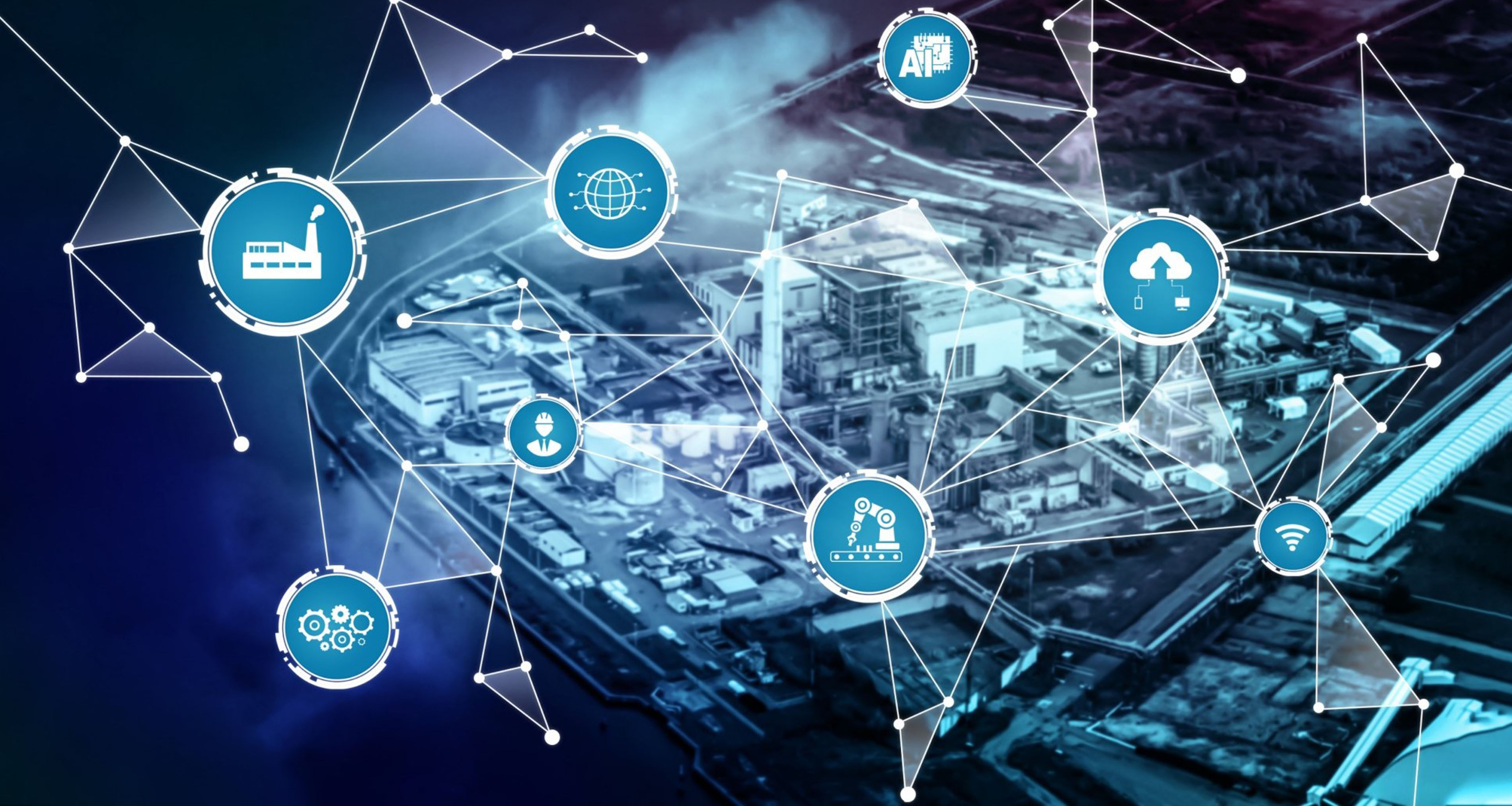
The Industrial Internet of Things (IIoT) is the application of Internet of Things (IoT) technology in the industrial sector. It involves connecting and integrating various industrial equipment, sensors, machines, and systems to achieve data collection and monitoring. Utilising technologies such as Big Data, Artificial Intelligence (AI), Cloud Computing, and Data Analytics, IIoT aims to optimise production processes through data analysis.
Why has Industrial Internet of Things (IIoT) become indispensable?
The Government is advancing "new industrialisation" at full speed, with the Internet of Things (IoT) being highly valued as the core of smart manufacturing. According to the latest 2026-27 Budget, the Government has successfully supported over 120 new smart production lines applying technologies such as IoT and real-time data through funding schemes. This has stimulated over $1 billion in private investment, demonstrating the massive market demand for IoT applications. To further consolidate the foundation for this development, the Government will launch the "New Industrialisation Elite Enterprises Nurturing Scheme" within this year to support high-growth enterprises. Furthermore, approximately $220 million has been earmarked to establish the first out-of-mainland National Manufacturing Innovation Centre in Hong Kong. This will comprehensively accelerate the pace of Hong Kong's new industrialisation, integrate into the overall national development layout, and inject strong new impetus into the economy.
Benefits of applying Internet of Things in industries include:
- By connecting and integrating various devices and systems, real-time monitoring and analysis of production process data can help identify potential issues early and obtain information on equipment failures and maintenance needs, achieving predictive maintenance.
- Reduce downtime and maintenance costs, increase equipment lifespan.
- Lower production costs and increase output.
- Collecting and analysing data provides stronger support for decision-makers, enabling the utilisation of data for optimising production processes, supply chain management, inventory control, customer service, and more.
All industries urgently require professionals to cope with the increasing demand for software and hardware equipment, vast network connections, and data development. To meet the talent demand for innovative technology development, HKCT has launched a unique Higher Diploma in Industrial Internet of Things (IIoT) programme across the territory. The programme enables students to master practical operational skills in the field of IoT, including cloud computing, data analysis, 5G, and other innovative knowledge, making them essential talents for Hong Kong's innovation and technology development.
HKCT provides ‘IoT’ related programme:
Higher Diploma in Industrial Internet of Things