Higher Education Know-how
Your Future in AI: A Guide to Careers and Getting Started
The wave of Artificial Intelligence (AI) is sweeping the globe at an unprecedented pace. You might not even realise it, but AI is already a huge part of your life—from the voice assistant on your phone to the recommendations on your social media feed. What was once a futuristic idea is now a real-world technology creating exciting new opportunities.
As you think about your future, you’re probably asking some big questions: What exactly is AI? What kind of jobs can I get? And most importantly, how can I get started and become someone the future needs? If you're wondering how to turn an interest in tech into a rewarding career, this guide is for you. We'll break down the essentials of AI, explore the best career paths, and show you how to take your first steps.
What is Artificial Intelligence (AI)? Exploring the 3 Core Technologies
Put simply, the goal of Artificial Intelligence (AI) is to enable computers to learn, think, reason, and solve problems in a way that mimics human intelligence.
Its core mechanism involves machines 'learning' from vast amounts of data through algorithms. For example, after an AI has processed millions of labelled photographs of cats and dogs, it can learn to recognise whether an image contains 'a cat or a dog'. This is the fundamental starting point of AI's intelligence. From this learning mechanism, AI has developed into several key technological branches:
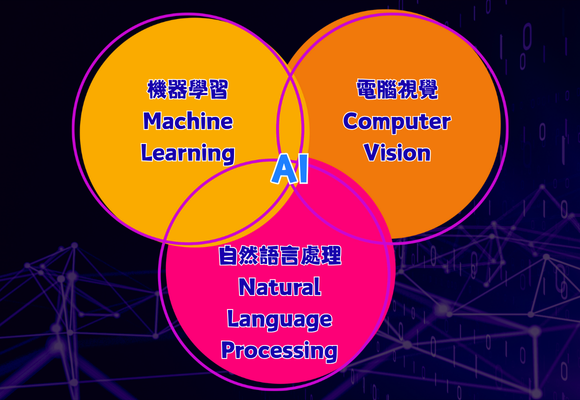
1. Machine Learning: The Brain of AI
This allows computers to automatically 'gain experience' from data, enabling them to make predictions or decisions. The spam filters we use daily, and the video recommendations on YouTube and Netflix, are all results of machine learning.
2. Computer Vision: The Eyes of AI
This gives machines the ability to 'see' and understand images and videos. From facial recognition on your phone and road detection for self-driving cars, to the automatic detection of tumours in medical scans, this technology is the driving force.
3. Natural Language Processing (NLP): The Mouth and Ears of AI
This enables computers to understand and generate human language, facilitating natural conversation. Siri, Google Translate, intelligent customer service chatbots, and even Large Language Models (LLMs) like ChatGPT, DeepSeek, and Grok are all prime examples of NLP.

Through these three branches, you can see that AI is not a single technology, but rather a vast toolbox that is bringing revolutionary changes to every industry.
What Jobs Can You Get with AI? 7 Hot Career Paths for Your Future
As AI grows, companies are looking for talented people from all backgrounds. An AI career isn't just for top research scientists anymore; there are many exciting and creative roles opening up. Here’s a look at some of the most in-demand jobs you could aim for.
In terms of salary prospects, the global shortage of AI specialists means that starting salaries and long-term earning potential for these roles are highly competitive. This is not just a job, but a career path with a clear progression ladder and continuous opportunities for growth.
How Can I Get Into AI with No Experience?
‘But what if my maths isn't good enough?’
‘Can I do this if I've never coded before?’
These are the biggest worries for students thinking about AI. Let's debunk these two common myths.
1. Maths: You Don't Need to Be a Genius. AI uses concepts from maths like linear algebra, calculus, and probability. But think of them as the language for understanding how AI works, not as a barrier. You don't need to be a master of complex theories. A good AI programme is designed to teach you the essential concepts and, more importantly, how to apply them.
2. Coding: Python is the universal language of AI, and it's famous for being beginner-friendly. Its simple syntax and huge community support make it the perfect first programming language. It is absolutely possible to learn Python from scratch at university.

Your First Step: Choose a Programme Built on Practice
Instead of worrying, the best thing you can do is start. AI is a field where your practical skills—what you can actually build—matter most. Choosing a programme that balances theory with hands-on projects is the most effective way to prepare for your career.
Most AI Higher Diploma / Bachelor’s Degree programmes are designed for beginners. You shouldn't feel discouraged by your current subjects, because these programmes are made to put everyone on the same starting line.
They will teach you from the ground up, starting with the basics of Python, how computers work, and core maths. From there, they will guide you into exciting fields like image processing, big data, machine learning, and deep learning.
By choosing a course with a strong focus on practical projects, you will graduate with a portfolio of work that proves your skills to employers. Your choice of what to study is a strategic investment in your future.
HKCT provides ‘AI’ related programmes:
Higher Diploma in Applied Artificial Intelligence
Bachelor of Science (Hons) in Computer Science and AI Engineering (Year 1 entry) 
Bachelor of Science (Hons) in Computer Science and AI Engineering (Year 3 entry)
This programme is subsidised under the 'Non-means-tested Subsidy Scheme'. The Scheme is subject to annual review by the government.
Want to learn more about which industries will see the most growth from AI?
Read our other article: Start Your AI Journey: The Future Prospects and Applications of Artificial Intelligence