Trusted Data Circulation Becomes Key to the Digital Economy
HKCT International Conference Focuses on Blockchain and Trust Mechanisms
Industry-academia Collaboration Promotes Web3 and AI Talent Development
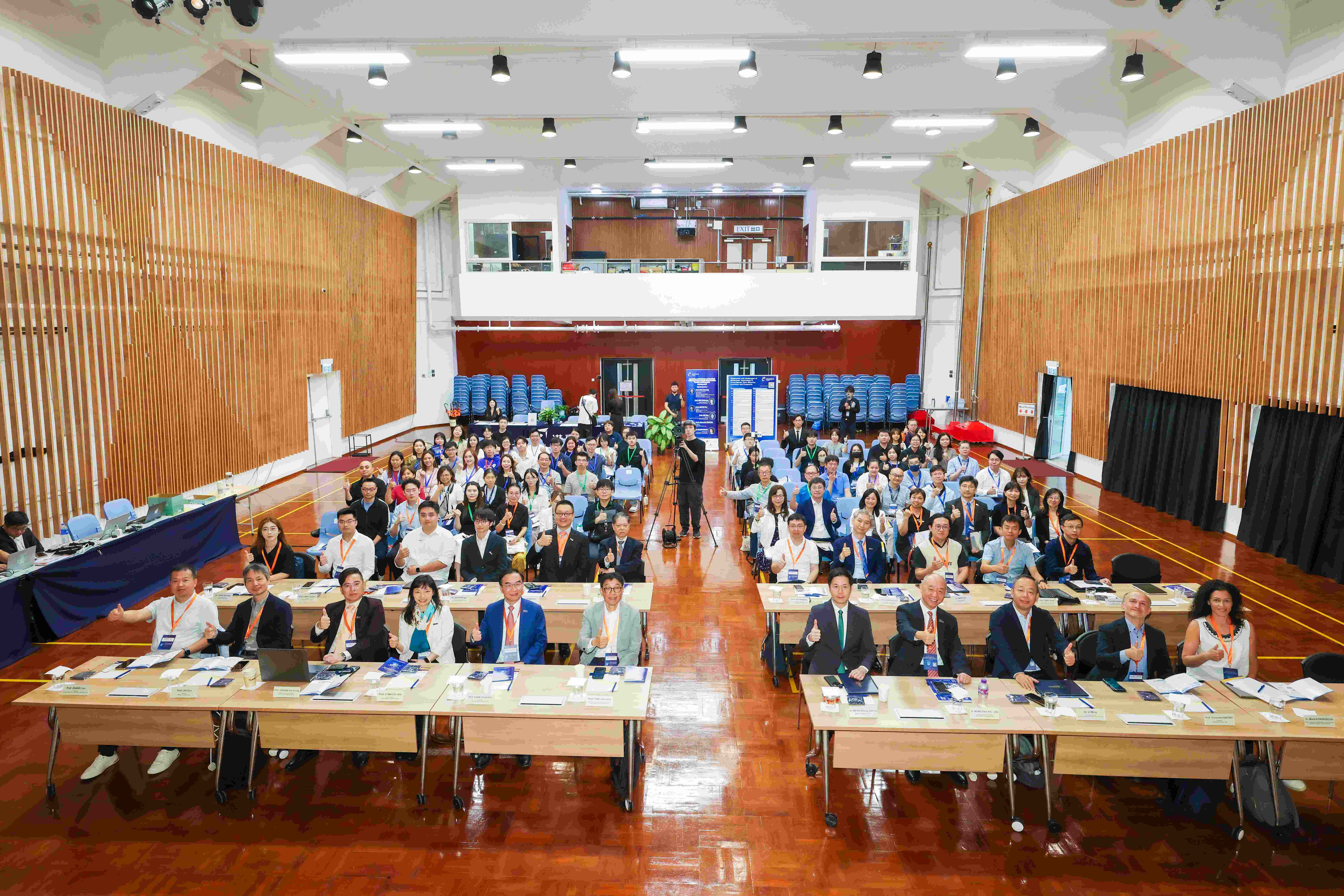
(The Institute of Cyberspace Technology at HKCT Institute of Higher Education hosted the international academic conference "Application and Challenges of Blockchain Technology in Cross-Border Data Security: Practices and Prospects," attracting more than 500 experts, scholars, industry leaders, and government and corporate representatives.)
(Hong Kong, 24 August 2026) The Institute of Cyberspace Technology at HKCT Institute of Higher Education ("HKCT") hosted a three-day international academic conference titled "Application and Challenges of Blockchain Technology in Cross-Border Data Security: Practices and Prospects" to examine the challenges and opportunities of cross-border data security. The conference brought together scholars and industry experts from Hong Kong, the Chinese Mainland, Japan, the United Kingdom, Italy and Australia to discuss the use of blockchain, artificial intelligence and related emerging technologies in building trusted data circulation mechanisms and promoting the sustainable development of the digital economy. The conference was supported by the Inter-Institutional Development Scheme funded by the Research Grants Council under the University Grants Committee of Hong Kong, with support from the China Computer Federation, IEEE Communications Society and BCS, The Chartered Institute for IT (Hong Kong Section), and attracted more than 500 experts, scholars, industry leaders, and government and corporate representatives.
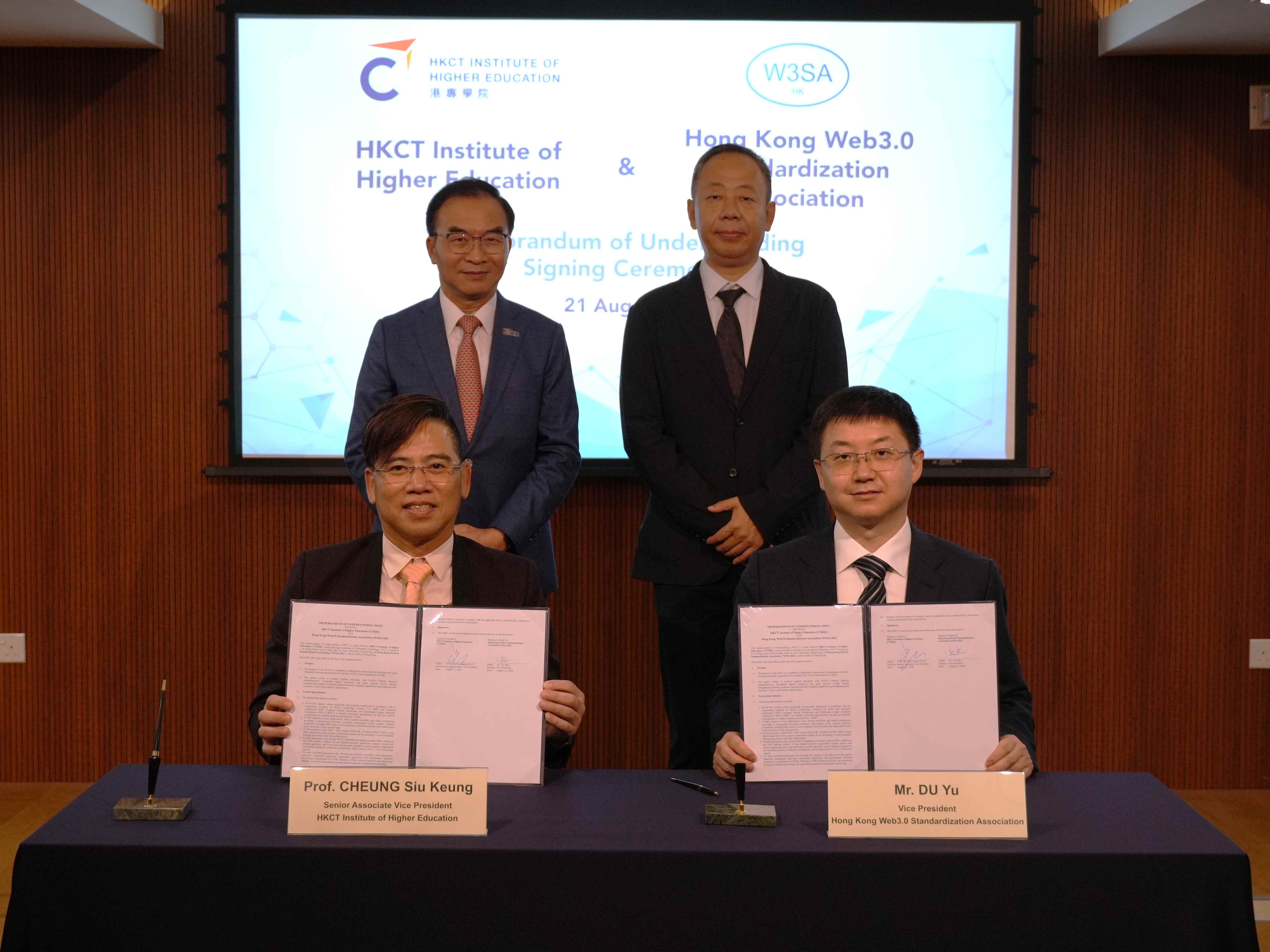
(HKCT Institute of Higher Education signed a Memorandum of Understanding with the Hong Kong Web3.0 Standardization Association to establish a framework for student internship and workplace collaboration, helping students connect with the frontiers of the Web3.0 and AI industries.)
As one of the important outcomes of the conference, HKCT signed a Memorandum of Understanding with the Hong Kong Web3.0 Standardization Association to establish a framework for student internship and workplace collaboration. In the future, students will have the opportunity to be given priority consideration for practical projects related to Web3.0 standards and market research, AI and digital-commerce application support, and major industry event operations. The collaboration will deepen industry-academia cooperation and help students connect with the frontiers of the Web3.0 and AI industries.
With the rapid development of artificial intelligence, blockchain and cross-border digital services, data has become an important resource driving innovation and economic development. As data increasingly flows across regions and organisations, ensuring that data is secure, trusted and verifiable has become an important issue of common concern to the global technology sector, industry and policymakers.
Trusted Data Becomes Key to Future Development
Artificial intelligence is gradually being applied in areas such as healthcare, finance, education and public services, and society has increasingly high expectations for data trustworthiness, security and traceability. Experts at the conference noted that the future development of artificial intelligence will rely not only on more powerful models and computing resources, but also on trusted data infrastructure that enables different organisations to safely share resources and collaborate on innovation.
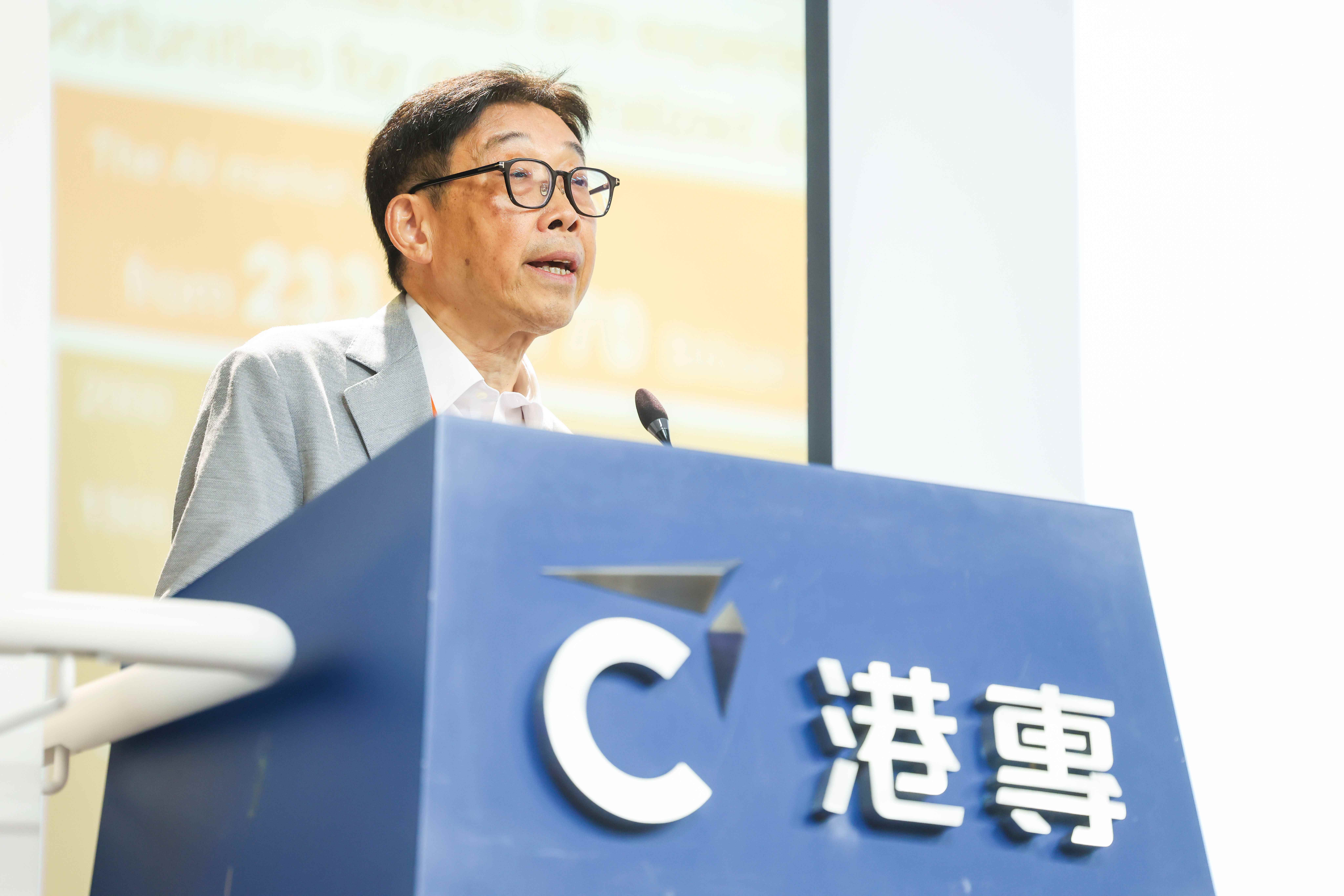
In his opening remarks, Dr. WONG Chun Kau, Jolly, Member of the Board of Governors of HKCT Institute of Higher Education and Honorary Chair of the conference, noted that trusted cross-border data flows cannot rely on technology alone. Clear rules, accountability and cross-sector collaboration are also essential to promoting innovation while protecting data security.
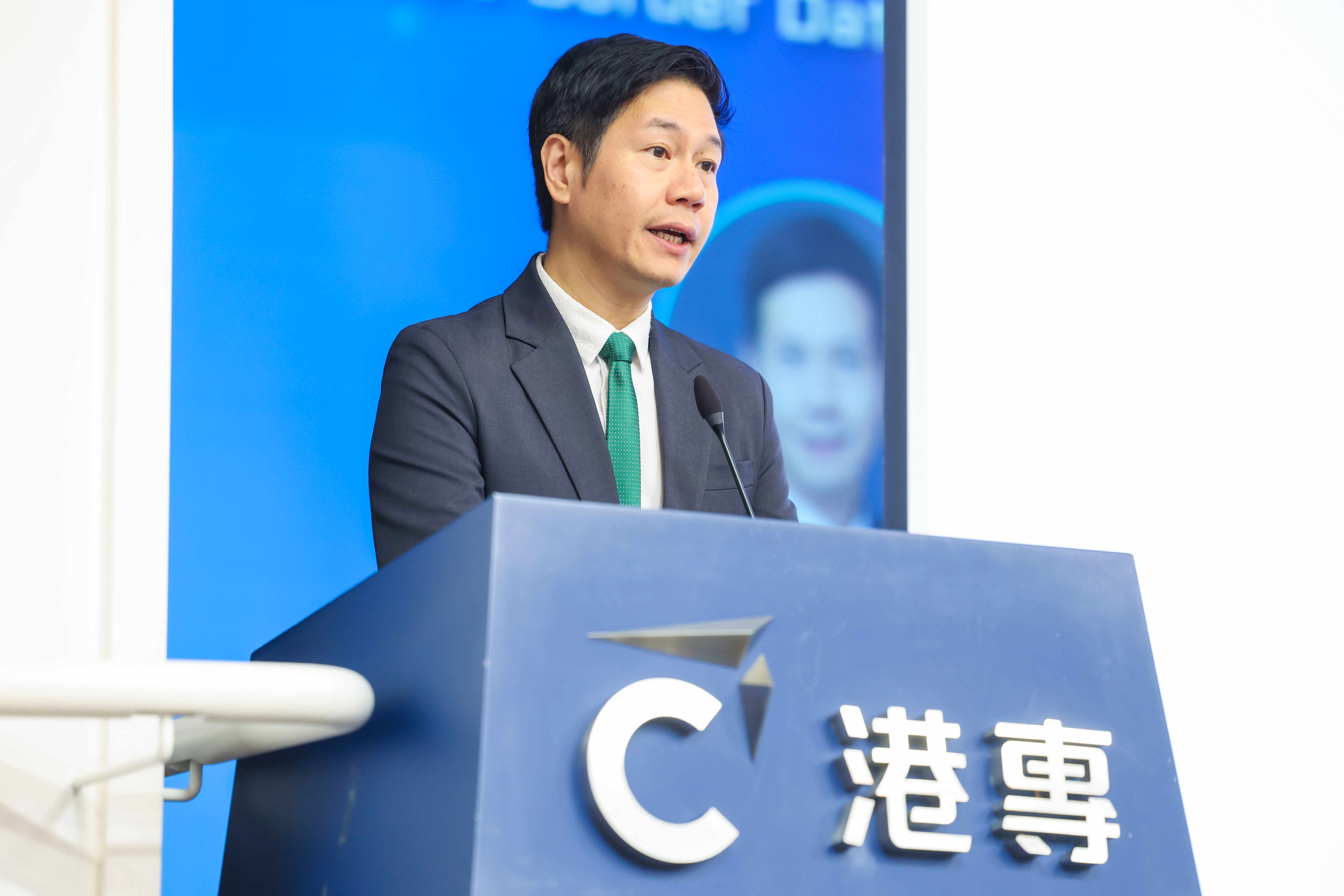
(Dr. the Honourable Johnny NG Kit-chong, MH, JP, Member of the Legislative Council, highlighted Hong Kong’s unique strengths in connecting the Mainland’s data market with international systems and contributing “Hong Kong solutions” to cross-border data security, technical standards and global data governance.)
Dr. the Honourable Johnny NG Kit-chong, MH, JP, Member of the Legislative Council, stated that under “One Country, Two Systems,” Hong Kong benefits from its common law system, internationally aligned privacy protection framework and direct access to the Mainland’s vast data market. Hong Kong is well positioned to serve as a secure transfer hub for national data assets going global and to contribute “Hong Kong solutions” to cross-border digital identity recognition, technical standards and global data governance.
(Prof. CAO Jiannong, Vice President (Education) and Chair Professor at The Hong Kong Polytechnic University, introduced "PolyLink," a Web3 AI infrastructure network, and shared its application concept for securely sharing AI models and computing resources across organisations.)
In his keynote speech, Prof. CAO Jiannong, Vice President (Education) and Chair Professor at The Hong Kong Polytechnic University, introduced "PolyLink," a Web3 AI infrastructure network. He discussed how decentralised technology can enable different organisations to securely share AI models and computing resources. He noted that trusted, secure and efficient data infrastructure will become an important pillar supporting the large-scale application of artificial intelligence in the future.
Autonomous AI Decision-Making Brings New Trust Challenges
In addition to generative artificial intelligence, AI agents with autonomous analysis, planning and execution capabilities are regarded as an important direction for the next stage of artificial intelligence development. In the future, AI agents may participate in corporate operations, logistics management, financial services and healthcare, and may even support cross-organisational collaboration and decision-making.
However, as AI moves from providing recommendations to autonomously executing tasks, ensuring authentic identity, reliable operation and traceable decision-making has become a new challenge. Prof. ZHU Liehuang, Distinguished Professor at the Beijing Institute of Technology, shared how blockchain can be used to verify identities and record operational processes, enhancing the transparency and traceability of AI decision-making and reducing the risk of systems being tampered with or abused.
Promoting Data Sharing While Protecting Privacy and Security
The development of artificial intelligence requires large amounts of data. However, when data involves personal privacy, medical records, financial information and corporate confidential information, striking a balance between unlocking data value and protecting privacy has long been an important issue of global concern. Prof. ZHANG Yan from the University of Electronic Science and Technology of China demonstrated the integrated application of blockchain and federated learning, enabling joint AI training without sharing raw data, so that different organisations can jointly improve model performance while protecting sensitive data.
In addition, international scholars shared research outcomes on the secure use of healthcare data, IoT data management and blockchain governance, reflecting global efforts to explore new models of trusted data circulation in response to the emerging needs brought by digital economy development.
Hong Kong Embraces New Opportunities in Cross-Border Data
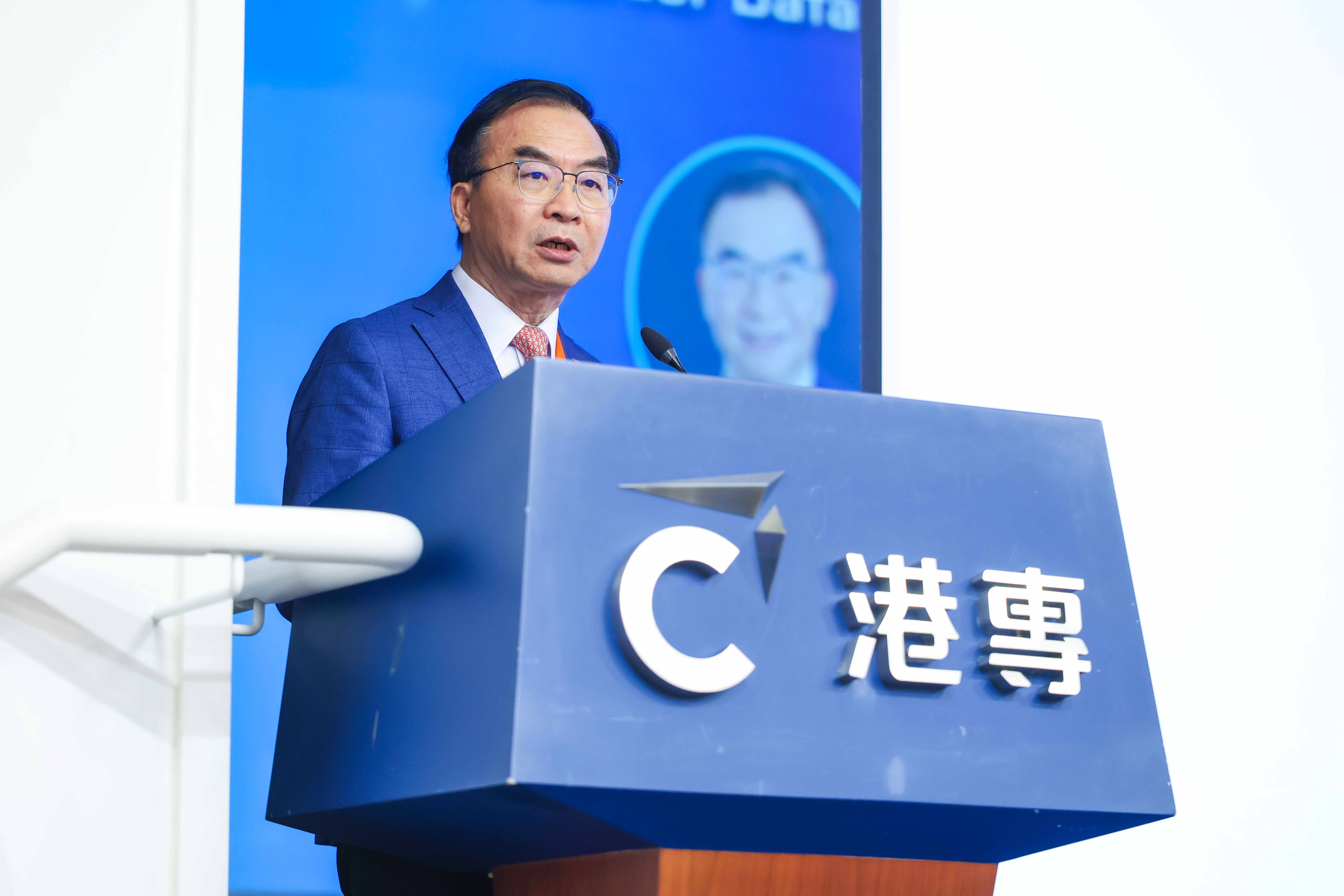
(Professor CHAN Cheuk Hay, President of HKCT Institute of Higher Education, noted that Hong Kong serves as a bridge connecting the Chinese Mainland with international markets, while effective data governance requires cooperation across regions, sectors and disciplines.)
As the country actively promotes the development of the digital economy and cooperation in the Guangdong-Hong Kong-Macao Greater Bay Area continues to deepen, cross-border data circulation and trusted governance have become important development directions. Professor CHAN Cheuk Hay, President of HKCT Institute of Higher Education, stated that Hong Kong, situated at the heart of the Guangdong-Hong Kong-Macao Greater Bay Area, serves as a crucial bridge connecting the Mainland with international markets. As the digital economy accelerates, secure and trusted cross-border data exchange has become increasingly important, while effective data governance requires cooperation across regions, sectors and disciplines.
Education Transformation Nurtures Talent for the Digital Era
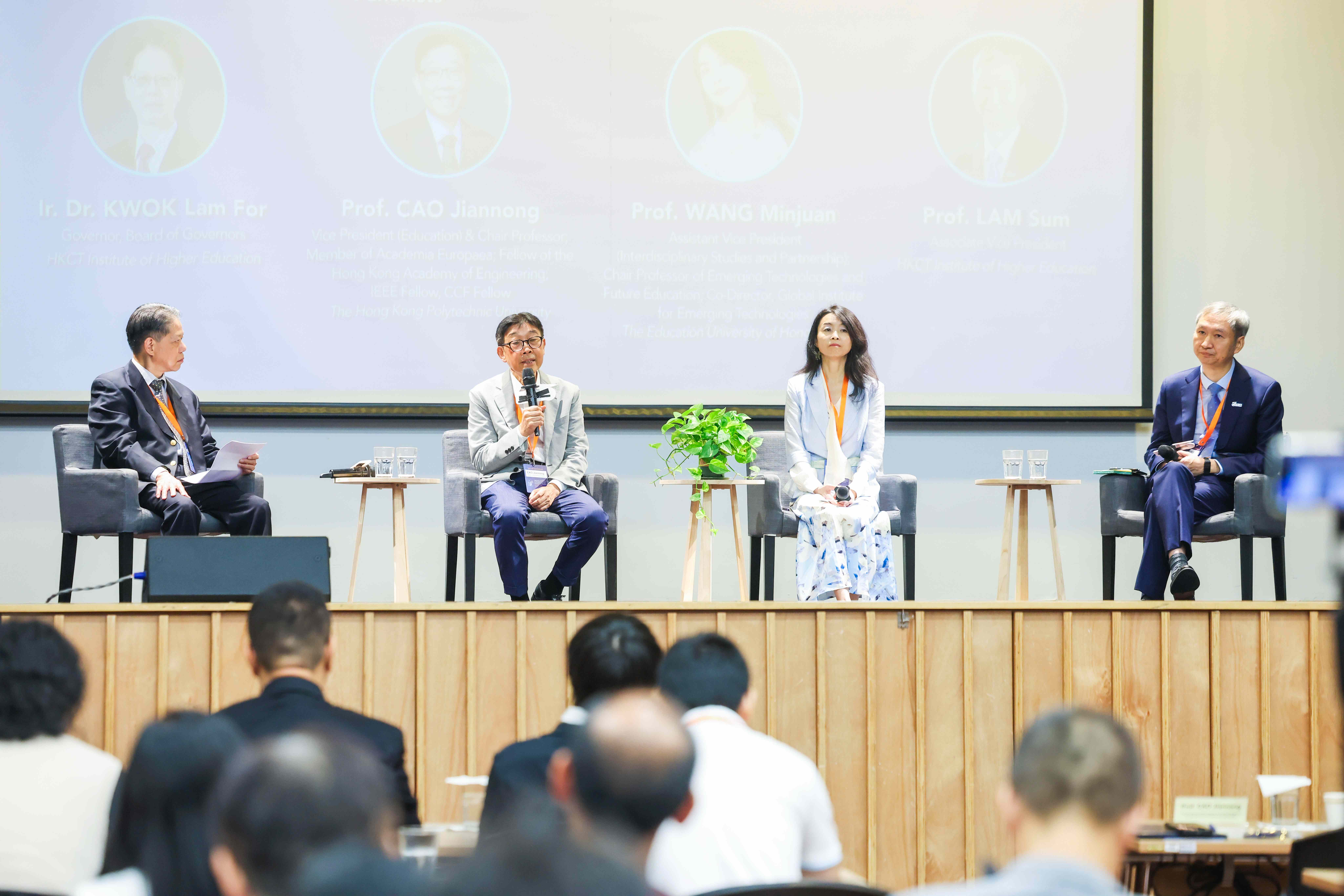
(In the panel discussion "Emerging Technology for Education 4.0: AI and Blockchain," Prof. CAO Jiannong, Vice President (Education) & Chair Professor of The Hong Kong Polytechnic University, Prof. WANG Minjuan, Assistant Vice President (Interdisciplinary Studies and Partnership) of The Education University of Hong Kong, and Prof. LAM Sum, Associate Vice President of HKCT Institute of Higher Education examined talent development directions in the AI era from the perspectives of higher education, primary and secondary education, and vocational and professional education respectively.)
Building trusted data circulation mechanisms is not only a technical issue, but also one related to talent development and social trust. In the panel discussion "Emerging Technology for Education 4.0: AI and Blockchain," Prof. CAO Jiannong, Vice President (Education) & Chair Professor of The Hong Kong Polytechnic University, Prof. WANG Minjuan, Assistant Vice President (Interdisciplinary Studies and Partnership) of The Education University of Hong Kong, and Prof. LAM Sum, Associate Vice President of HKCT Institute of Higher Education, representing higher education, primary and secondary (K12) education, and vocational and professional education respectively, examined talent development directions in the AI era from the perspectives of different education stages.
Participants noted that future talent will need not only knowledge of artificial intelligence, blockchain and data technologies, but also ethical conduct, critical thinking, creativity, data security awareness and interdisciplinary collaboration capabilities. Collaboration among academia, industry and the research sector will also be important in nurturing interdisciplinary technological talent capable of responding to the needs of the digital society and digital economy.
Building a Secure and Trusted Digital Future
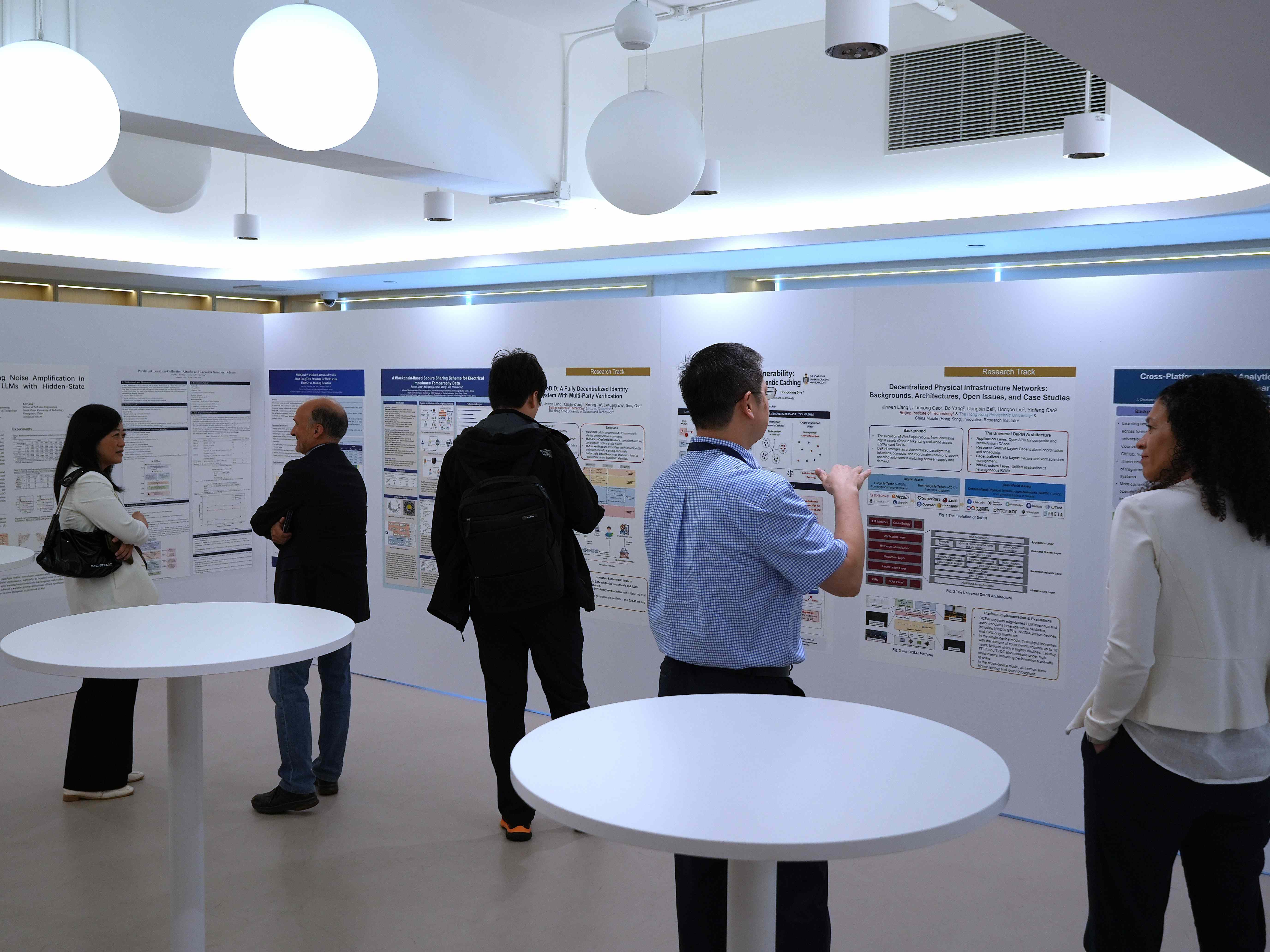
(The Poster Presentations showcased research outcomes by young scholars from the Chinese Mainland, Hong Kong, Japan and Australia in areas including AI system defence, decentralised identity authentication, privacy-preserving payments, smart transportation and IoT data security.)
The conference also featured Poster Presentations, showcasing research outcomes by young scholars from the Chinese Mainland, Hong Kong, Japan and Australia. The topics covered AI system defence, decentralised identity authentication, privacy-preserving payments, smart transportation and IoT data security, echoing the conference’s focus on trusted data circulation and demonstrating the exploratory potential of a new generation of research talent in artificial intelligence and data security.
HKCT will actively contribute to the development of emerging fields including artificial intelligence, blockchain and cross-border data security, and promote the translation of academic knowledge into practical solutions that respond to the needs of industry and society. HKCT will continue to play a platform role in connecting academia, industry and the policy sector, promoting trusted data governance, cross-border collaboration and talent development, and contributing to the building of a secure and trusted digital future for Hong Kong and the Guangdong-Hong Kong-Macao Greater Bay Area.
Appendix: Conference Speakers and Topics
Pre-conference Webinar Sessions
Dr. WANG Qin (Senior Research Scientist, CSIRO, Australia): “Security Analysis of PoA Consensus Protocols”
Dr. ZHANG Mingjin (Research Assistant Professor, The Hong Kong Polytechnic University): “Efficient Geo-distributed LLM Inference in Collaborative Edge Computing”
Prof. LIANG Jinwen (Professor, Beijing Institute of Technology): “Security Foundations for Blockchain-Based Data Services”
Dr. CONG Ruichen (Assistant Professor, Waseda University, Japan): “Toward Trustworthy Decentralised Health Data Integration and Sharing”
Opening Ceremony
Professor CHAN Cheuk Hay (President, HKCT Institute of Higher Education)
Dr. the Honourable Johnny NG Kit-chong, MH, JP (Member of the Legislative Council)
Dr. LI Ming (Chair of the IEEE Computer Society Blockchain and Distributed Ledger Standards Committee and Executive President of the Hong Kong Web3.0 Standardization Association)
Dr. WONG Chun Kau, Jolly (Member of the Board of Governors of HKCT Institute of Higher Education and Honorary Chair of the conference)
Keynote Speeches
Prof. CAO Jiannong (Vice President (Education) and Chair Professor, The Hong Kong Polytechnic University): “Blockchain for Trustworthy Web3 AI Infrastructure”
Prof. ZHU Liehuang (Distinguished Professor, Beijing Institute of Technology): “Blockchain-Enabled Trustworthy and Secure Agent Networks”
Prof. ZHANG Yan (Professor, University of Electronic Science and Technology of China): “Integrating Blockchain and Federated Learning: State-of-the-Art and Future Development”
Prof. JIN Qun (Professor, Waseda University, Japan): “Facilitating the Secure Cross-Border Use of Health Data for the Benefit of Humanity”
Prof. Giancarlo FORTINO (Professor and IEEE Fellow, University of Calabria, Italy): “Trust in Edge-based Internet of Things Architectures: State of the Art and Research Challenges”
Dr. Maria KYROPOULOU (Senior Lecturer and Faculty Director of Partnerships, University of Essex, United Kingdom): “Strategic Behaviour in Blockchain Systems: Implications for Cross-Border Data Security”
Panel Discussions
Prof. CAO Jiannong (Vice President (Education) and Chair Professor, The Hong Kong Polytechnic University), Prof. WANG Minjuan (Assistant Vice President (Interdisciplinary Studies and Partnership), Chair Professor of Emerging Technologies and Future Education, and Co-Director of the Global Institute for Emerging Technologies, The Education University of Hong Kong), and Prof. LAM Sam (Associate Vice President, HKCT Institute of Higher Education): “Emerging Technology for Education 4.0: AI and Blockchain”
Mr. DU Yu (Executive Director, Wanxiang Blockchain), Ms. TU Wenhui (Researcher, China Mobile HK IRI), Prof. WU Weigang (Professor and Vice Dean, School of Computer Science and Engineering, Sun Yat-sen University), and Dr. WANG Qin (Senior Research Scientist, CSIRO, Australia): “Blockchain and Web 3.0 Research-Industry Development Trend”