HKCT Actively Participates in “Hong Kong Five-Year Plan and 2026 Policy Address: 'Connecting Hearts • Benefiting Livelihoods and Warming Peoples' Hearts' Sharing Session”
Dr. Lam King Yee Shares Four Key Recommendations on AI Adoption and Capacity Building in the Social Welfare Sector
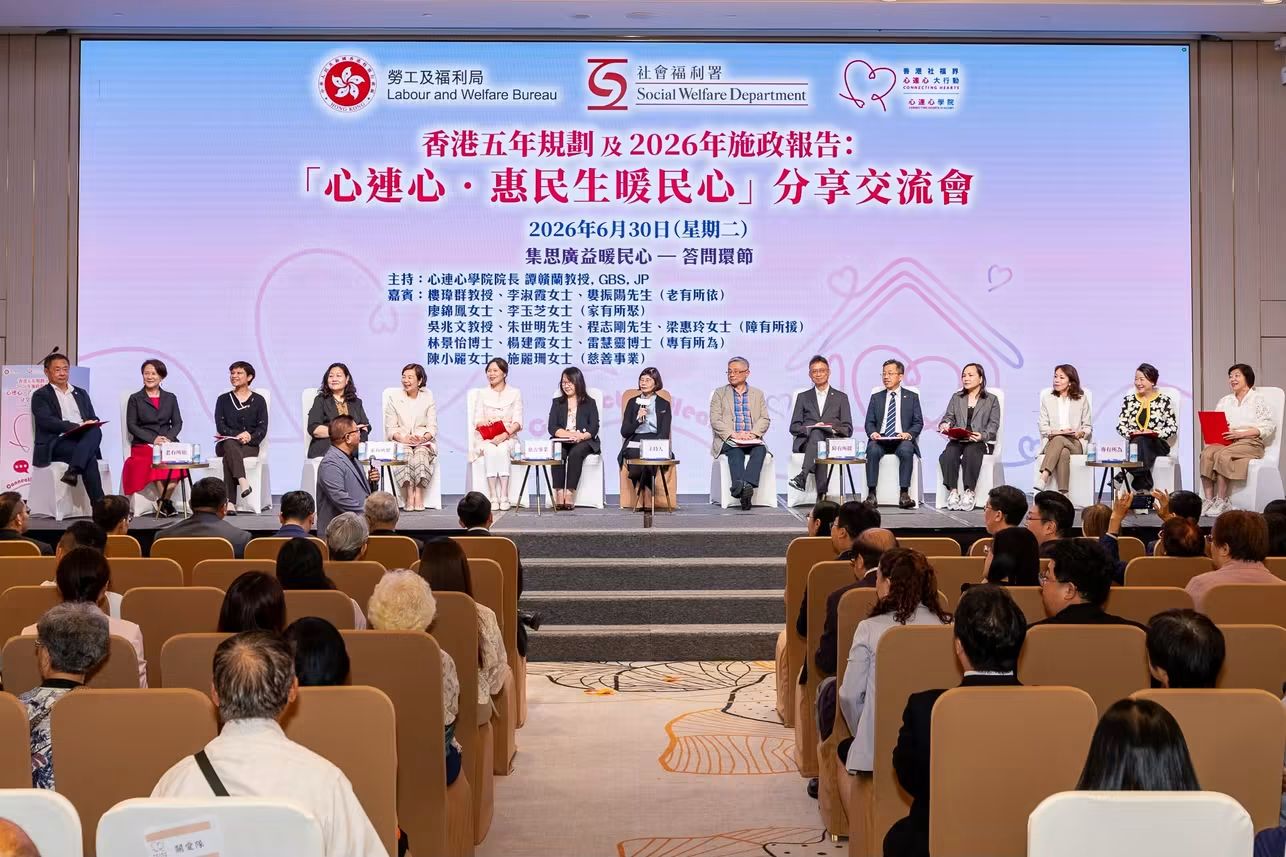
As a Hong Kong-rooted institution of Vocational and Professional Education and Training (VPET) committed to serving the community, HKCT has long been dedicated to nurturing application-oriented talent that meets the evolving needs of society through professional education, industry collaboration, and knowledge transfer. Recently, Dr. Lam King Yee, Head of the Division of Humanities and Social Sciences at HKCT, was invited to attend the “Hong Kong Five-Year Plan and 2026 Policy Address: 'Connecting Hearts • Benefiting Livelihoods and Warming Peoples' Hearts' Sharing Session”. Together with 1,300 stakeholders from 320 social welfare organisations and district groups, she explored Hong Kong’s future development directions and contributed recommendations on social welfare policies.
At the forum, Dr. Lam shared the latest trends and policy recommendations on artificial intelligence (AI) adoption and capacity building in the social welfare sector, drawing on industry surveys and practical observations conducted by the "Chun You Suo Wei" Working Group. A questionnaire survey carried out by the Working Group in 2026 gathered responses from 441 professionals across the social welfare and tertiary education sectors, providing insights into the current state, needs, and challenges relating to AI application, capability development, and professional training.
The survey findings revealed that AI is gradually becoming integrated into social service workflows, significantly enhancing efficiency in administrative tasks, report writing, and knowledge retrieval for many practitioners. However, the sector continues to face four major challenges in advancing AI development: insufficient policy support, limited technological resources, gaps in professional training, and concerns surrounding data privacy and ethical governance.
Four Priority Policy Recommendations to Build a Robust AI Ecosystem
To address these challenges, Dr. Lam proposed four priority policy recommendations at the forum, calling for collaborative efforts between the Government and the sector to drive transformation and capacity enhancement within the social welfare field:
1. Establish an “AI Capacity Building” Funding Framework:
Shift funding support from merely purchasing equipment to investing in capabilities, including staff training, workflow optimisation, and digital transformation initiatives.
2. Develop a Tiered Continuing Professional Development (CPD) Framework for AI Literacy:
Introduce a three-tier training model comprising “Foundation for All”, “Advanced Training for Frontline Practitioners”, and “Leadership Development for Management” to strengthen AI competencies across the sector.
3. Formulate Data Privacy Guidelines and Ethical Governance Mechanisms:
Ensure that technological advancement progresses in tandem with professional ethics, safeguarding service users’ rights and maintaining the professional autonomy of social workers.
4. Promote Cross-Sector Collaboration among Government, Industry, Academia, and the Community:
Establish a standing collaborative platform to facilitate the implementation of innovative solutions, talent development, and service innovation across sectors.
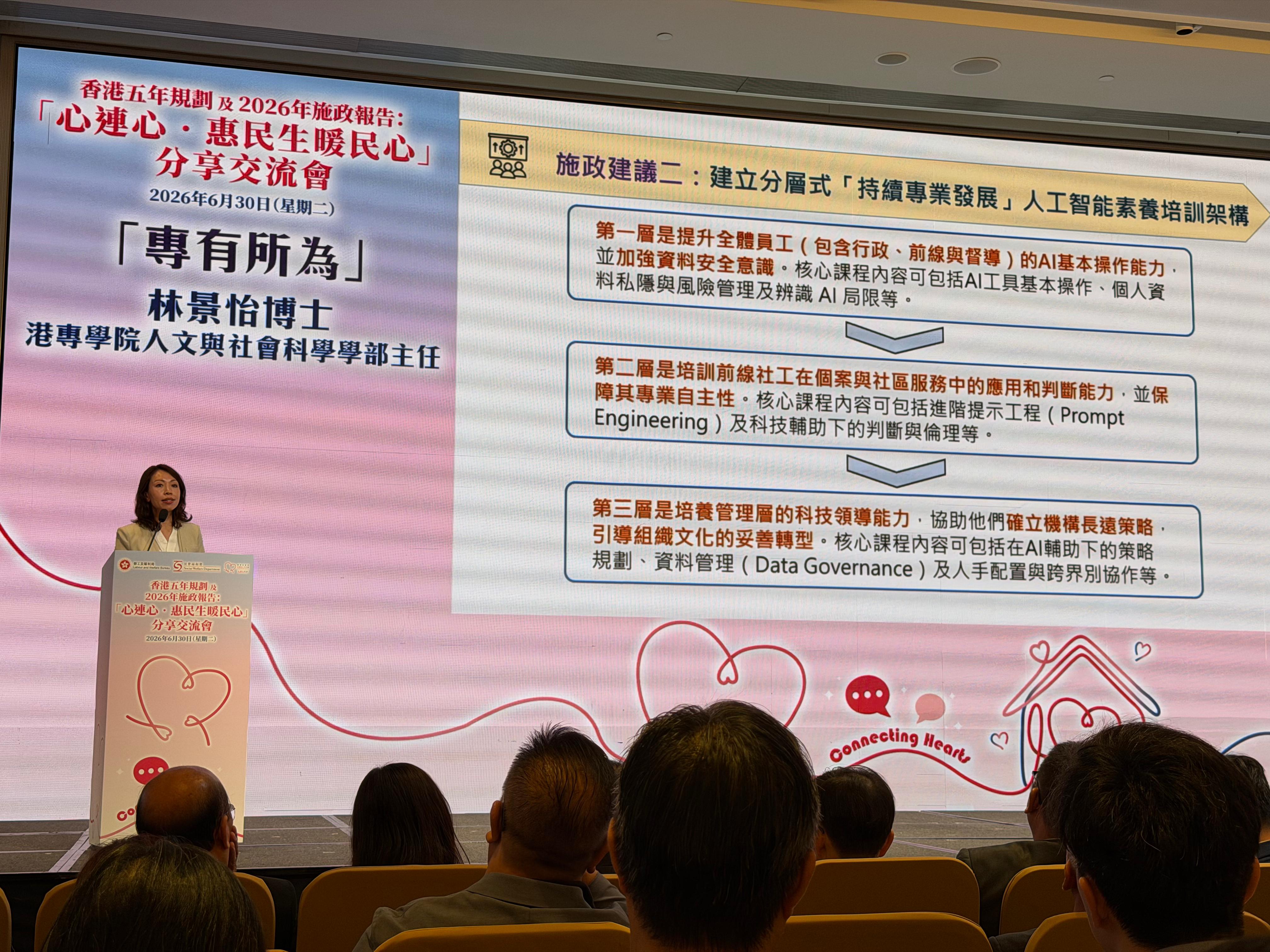
Dr. Lam King Yee emphasised that the development of AI should go beyond improving operational efficiency and be integrated with professional values, human-centred care, and capability building to help social services respond to future challenges. She noted that, amid an ageing population, rising demand for caregiver support, and evolving service delivery models, Hong Kong needs to strengthen policy support, professional training, and cross-sector collaboration to cultivate a new generation of social service professionals equipped with both digital literacy and sound professional judgement. Findings from the Working Group’s survey and industry engagement activities also highlighted the importance of upholding the principle of “people first, AI as an enabler”, leveraging technology to enhance service quality while safeguarding the core values and professional integrity of social work.
As a higher education institution with a strong focus on Vocational and Professional Education and Training (VPET), HKCT has in recent years actively integrated AI, digital technologies, and innovation into its teaching and professional training programmes. Through close collaboration with industry and community partners, the institution is committed to nurturing talent with practical competencies and innovative mindsets. The Division of Humanities and Social Sciences at HKCT has also been actively exploring the application of AI in social service education and practice, including the incorporation of AI tools into teaching and professional training to enhance the digital literacy of students and practitioners and prepare them for the future development of social services.
Through its participation in the forum, HKCT hopes to further leverage its strengths in VPET and knowledge transfer to foster collaboration among academia, industry, and the wider community. By doing so, the institution aims to contribute to Hong Kong’s future development and the well-being of its people, while helping to build a more resilient, caring, and innovative society.