From Fear of Smartphones to Confident Cross-Border Travel
Older Adults Share Their Stories: Technology Becomes Less Daunting with Someone by Your Side
(12 January 2026, Hong Kong) As the Greater Bay Area continues to develop into an increasingly integrated living circle, travelling to the Mainland for retirement, family visits or medical care has become increasingly common among older adults in Hong Kong. Yet for many seniors, it is not a lack of desire to travel that holds them back. Instead, rapidly evolving mobile applications (apps), complex digital maps and electronic payment systems can feel overwhelming. Some may even give up on travelling altogether for fear of pressing the wrong button on their phones or getting lost.
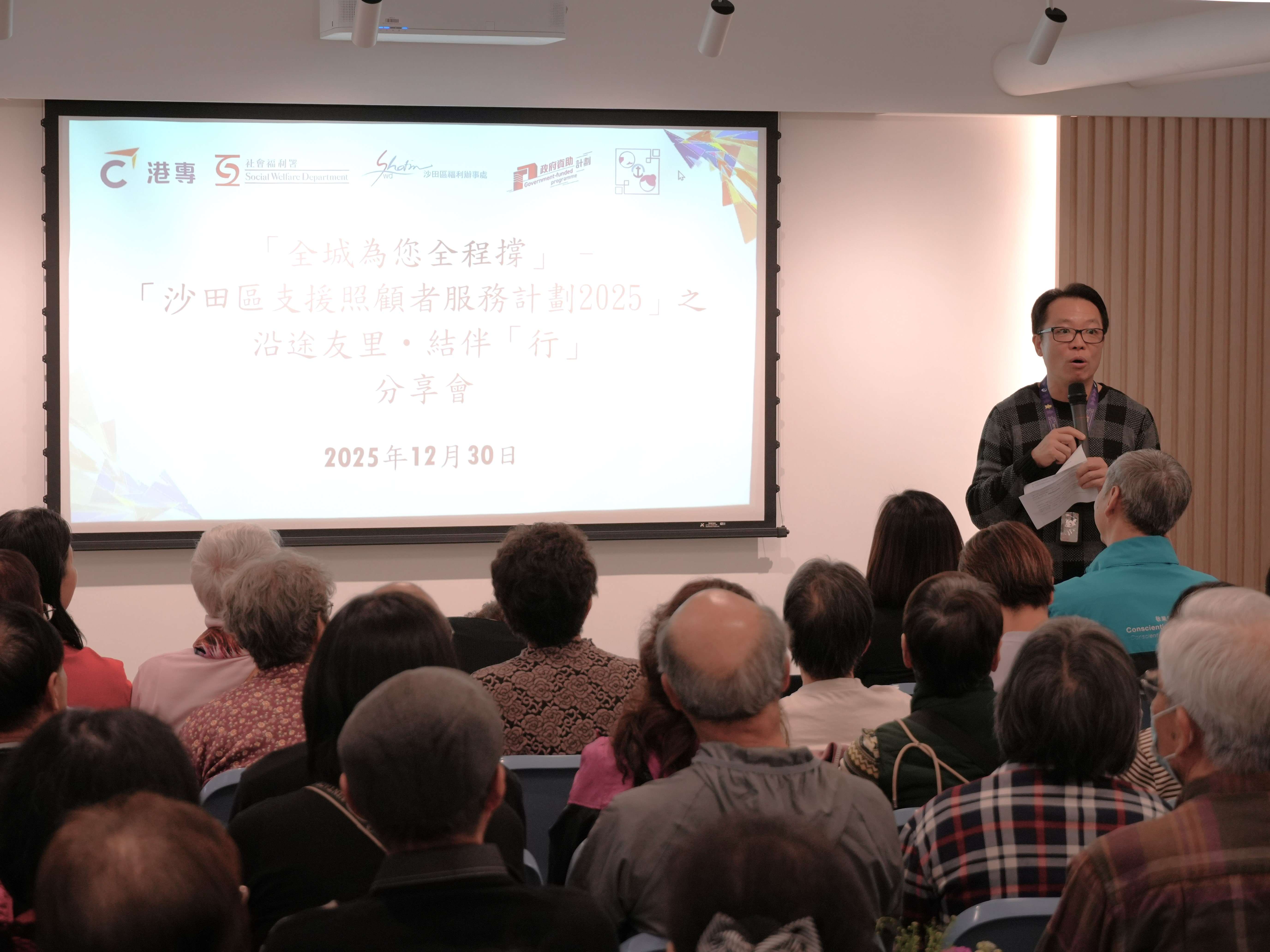
Recognising that this challenge may appear to be about technology, but is in fact often a psychological barrier, the Hong Kong College of Technology (HKCT), with funding from the Social Welfare Department’s Sha Tin District Social Welfare Office, joined hands with The Mission Covenant Church Yiu On Neighbourhood Elderly Centre and CCC Fong Yun Wah Secondary School to launch the "Companion Journey: Walking Together Along the Way" programme.
Rather than simply teaching older adults how to use smart technology for travelling, the programme places equal emphasis on companionship and hands-on experience. With young people accompanying and supporting them along the way, senior participants are able to gradually overcome their apprehension about technology, put their newly acquired skills into practice and, most importantly, rebuild their confidence in cross-border travel.
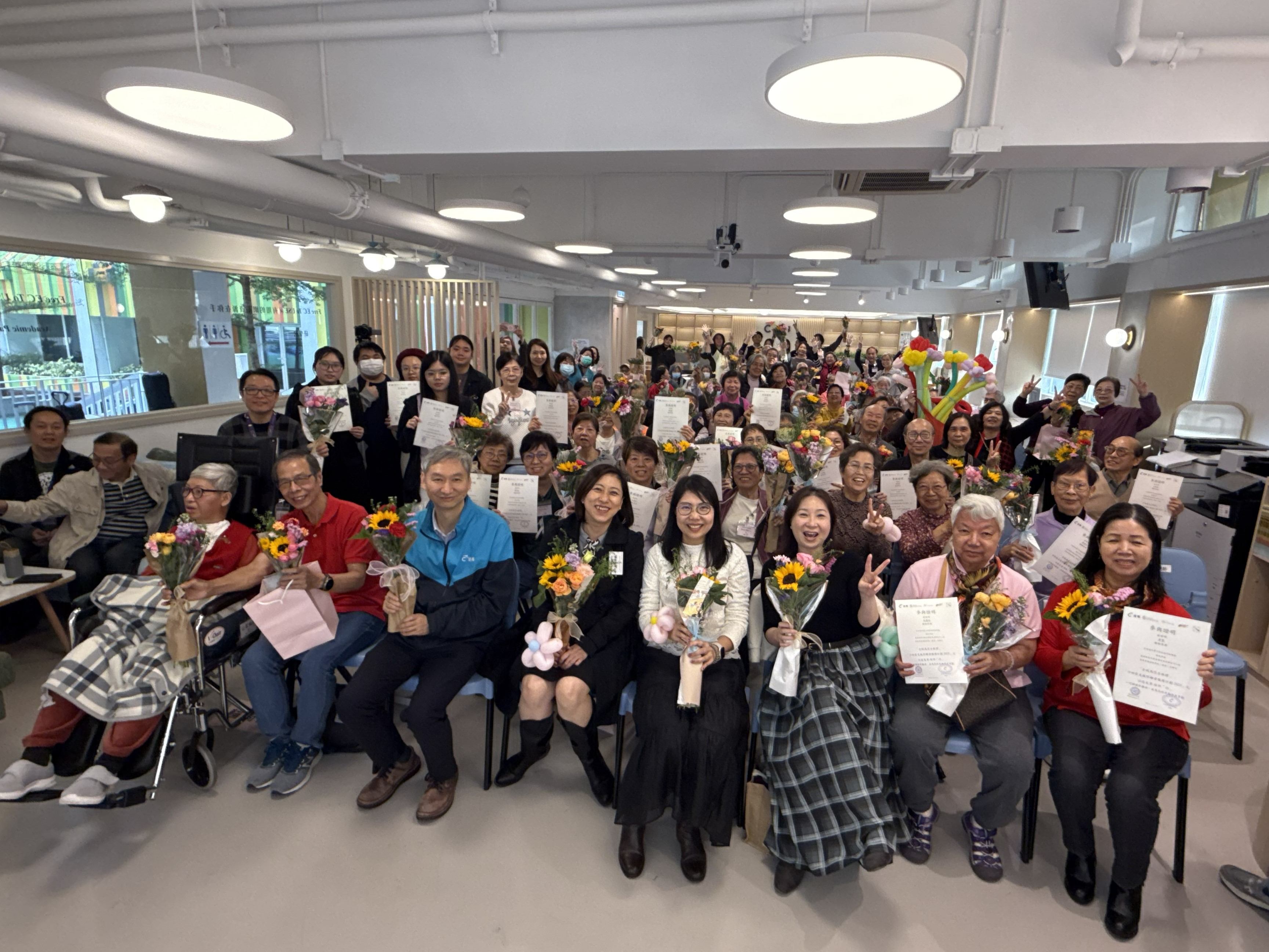
Addressing Travel Challenges Faced by Older Adults through Real-Life Cross-Border Scenarios
The "Companion Journey: Walking Together Along the Way" programme is one of the key initiatives under the "Fostering a Carer-friendly Community 2025”. Unlike conventional one-way technology workshops, the programme adopted a hands-on training approach comprising six practical sessions.
Under the programme, a professional team from HKCT first trained secondary school students enrolled in the Certificate in Gerontech and Services (Senior Secondary Applied Learning) programme at CCC Fong Yun Wah Secondary School to become peer trainers. These students then taught around 30 elderly volunteers from The Mission Covenant Church Yiu On Neighbourhood Elderly Centre how to use essential mobile applications for cross-border travel.
The learning journey did not end there. The elderly volunteers subsequently passed on the knowledge and skills they had acquired to other older adults in the community, creating a sustainable cycle in which digital knowledge, practical skills and confidence could be shared from one group to another.
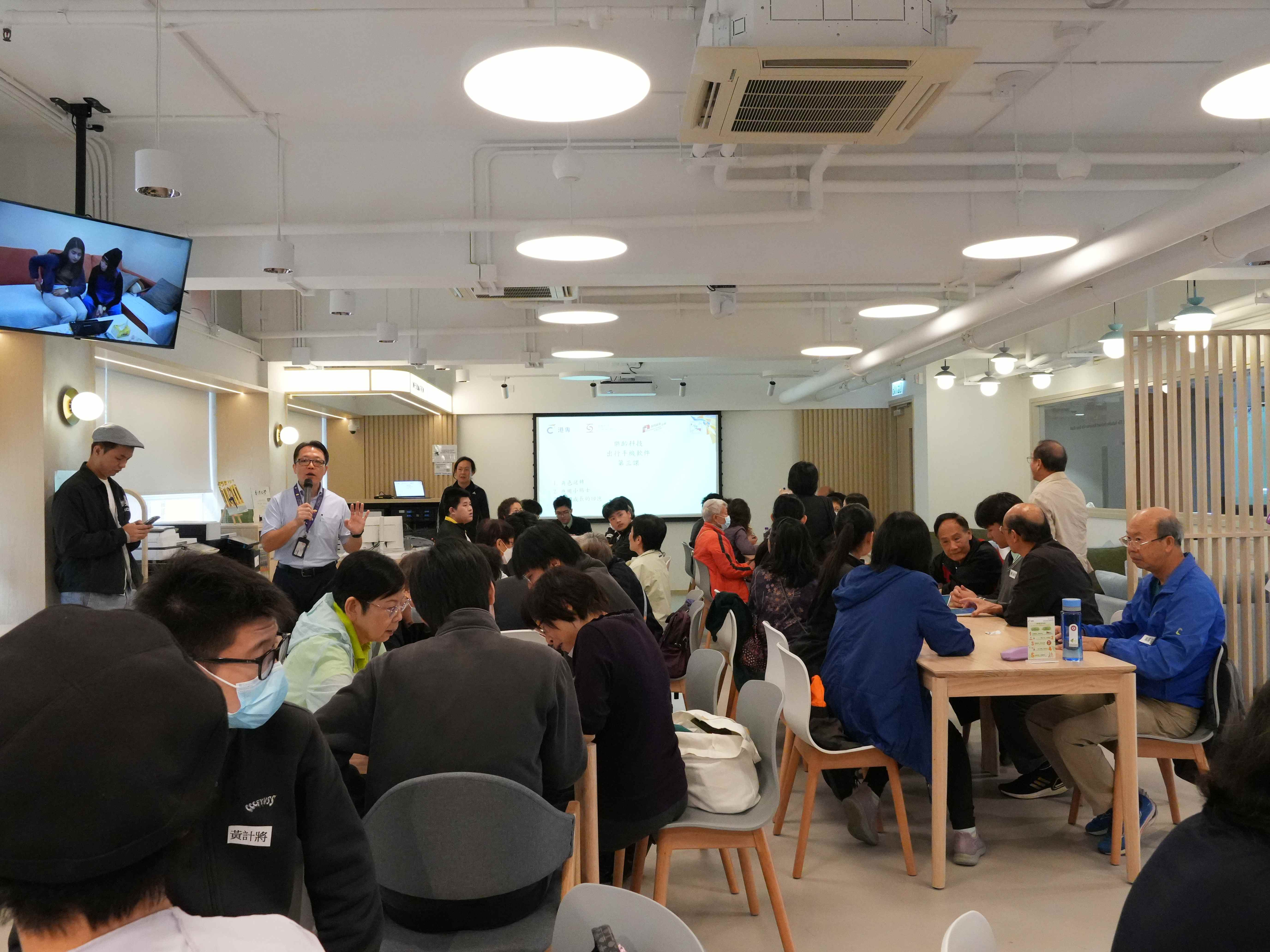
Beyond the training sessions, HKCT sought to extend the benefits of the programme to more older adults. A team of students from HKCT’s Higher Diploma in Creative Design and Media Production produced a series of instructional videos entitled "Companion Journey: Walking Together Along the Way", turning what they had learnt into an accessible learning resource for the wider community.
The videos recreate a realistic scenario in which an older adult caring for another elderly family member travels to the Mainland to seek medical treatment. From preparing for the journey and using digital maps for navigation, to booking ride-hailing services and understanding the precautions associated with electronic payments, the videos use relatable, everyday scenarios to demonstrate step by step how older adults can overcome common challenges when travelling across the boundary. Through these practical demonstrations, the videos aim to help older adults and their caregivers travel with greater confidence and independence.
From “I Don’t Dare to Try” to “I Can Do It Too”
Anxiety about technology often stems from unfamiliarity. Cheung Fung-chu, an elderly participant who took part in filming the videos, admitted that when she was first introduced to new smartphone functions, she found them daunting. “I thought it was very difficult and simply didn’t dare to try,” she recalled.
With systematic, step-by-step guidance through the programme, however, she gradually overcame the psychological barrier. “Once I got the hang of it, I realised, ‘I can do it too.’ It gave me confidence and made me want to keep learning.”
Her experience illustrates that helping older adults embrace technology is not simply about teaching them how to use digital tools. Equally important is giving them the confidence to take the first step, try things for themselves, and continue learning at their own pace.
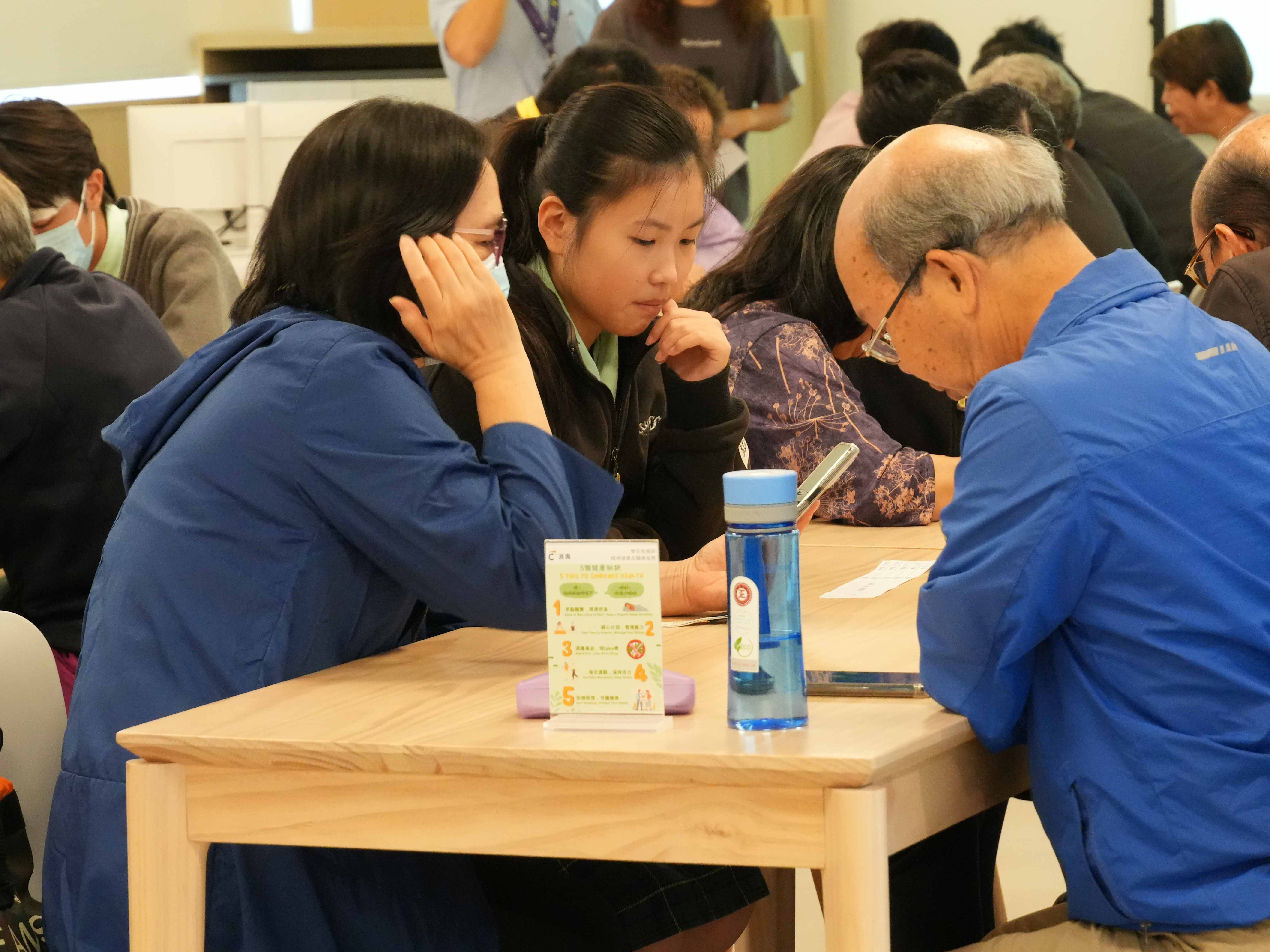
Another participant, Tsang Bo (“BoBo”), said with a smile that the most valuable part of the learning experience was the human connection it brought. She shared, “Having young people by our side made learning so much more enjoyable. The students from CCC Fong Yun Wah Secondary School were very patient and attentive, guiding us step by step.”
After completing the training, BoBo was also able to overcome some of the practical challenges she had previously encountered in everyday life. She said, “Now I can manage my basic needs when travelling in the Mainland, such as finding restaurants and looking up transport options.”
Her experience demonstrated that intergenerational learning goes beyond simply passing on digital skills. Through patient guidance and companionship, young people can help older adults build the confidence to embrace technology and apply what they have learnt to make their everyday lives more convenient and independent.
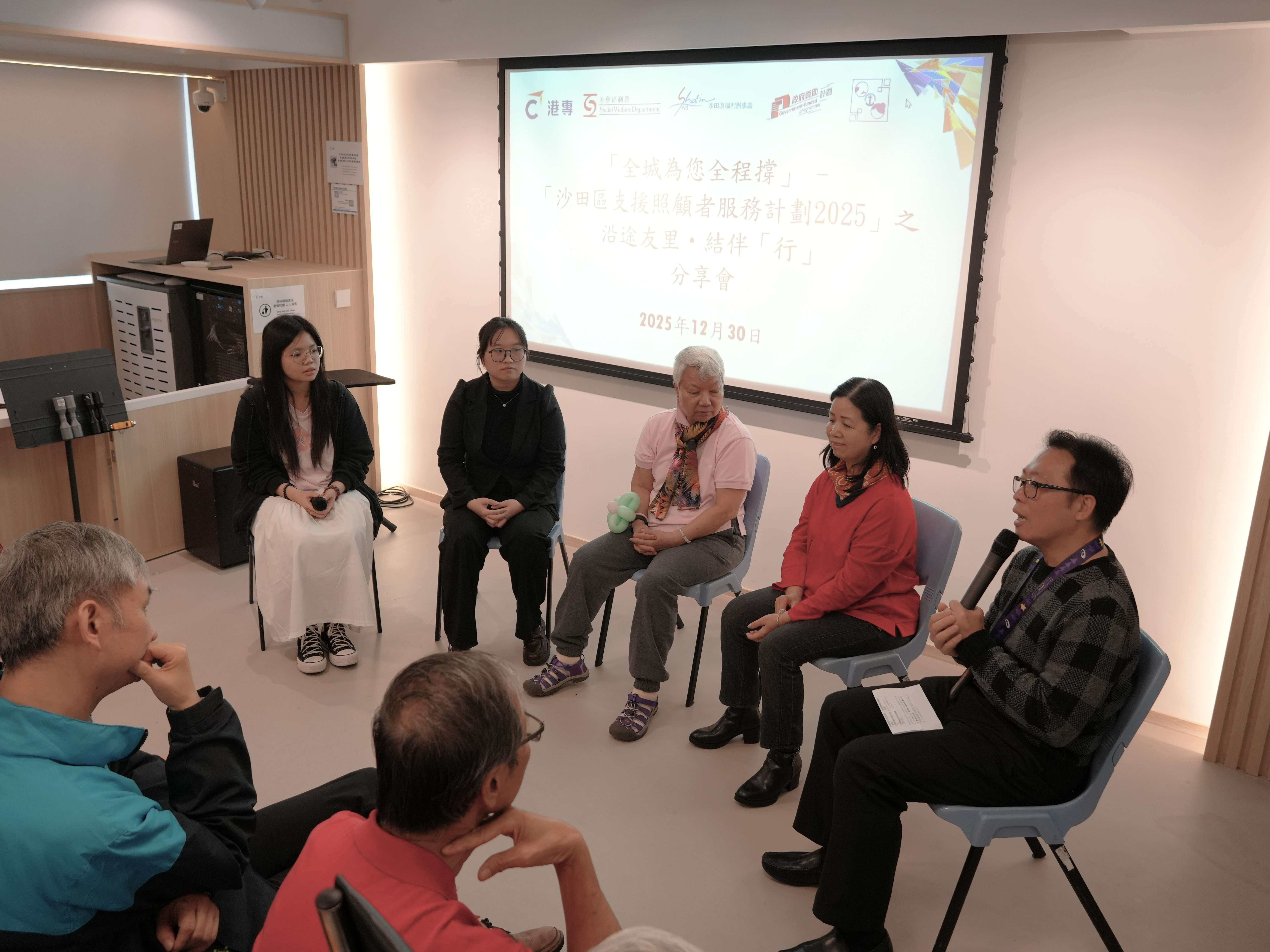
Building Empathy: Students Discover that Companionship Matters More than Technology
The learning journey was mutually rewarding, benefiting not only the older participants but also the students involved. HKCT students Yip Tsz-ki and Ko Wing-ki, who served as the director and scriptwriter of the instructional videos, said the experience had strengthened their intergenerational communication skills and empathy, while prompting them to reflect on the true purpose of technology services.
“We came to realise that technology may not be able to solve every problem faced by older adults straight away. What matters even more is having someone by their side,” they said.
To carry this spirit of companionship forward, the students are considering developing a more comprehensive and elderly-friendly guide to using mobile apps, with clearer instructions tailored to the needs of older users. By applying their professional knowledge and creative skills to serve the community, they hope to make technology more accessible and ensure that no one is left behind in the rapidly evolving digital world simply because of their age.
Applied Learning Strengthens Intergenerational Communication Skills
Mr Joseph Tse, Deputy Head of HKCT’s Division of Applied Learning and Development, said the project had provided valuable insights into the development of Applied Learning programmes for secondary school students. Against the backdrop of an ageing population, he noted that the Gerontech and Services programme not only helps secondary school students explore and plan their future career paths, but also exposes them to challenges that closely resemble those they may encounter in real-world working environments.
Through interacting with older adults whom they had not met before, the students came to realise that technological advancement alone does not necessarily solve the everyday problems faced by the elderly. In fact, when technology evolves too quickly, some older adults may find it difficult to keep pace and consequently become reluctant to use it.
The project also marked the first time that secondary school students participating in the Applied Learning programme were given the opportunity to reflect, through experiential learning, on the importance of intergenerational communication skills in their future careers. The experience enabled them to look beyond the technical application of gerontechnology and better understand the importance of communicating with, listening to and responding to the needs of different generations.
Innovative Cross-Generational, Cross-Professional and Cross-District Collaboration Promotes Community Inclusion
Dr Yip Chun-tung, Assistant Director (Student and Community Engagement) of HKCT, said the key to the success of the project lay in its distinctive collaborative model. He explained, “This was an innovative initiative that brought together the strengths of cross-generational inclusion, involving university and secondary school students as well as older adults; cross-professional collaboration, connecting vocational and professional education and training with elderly services; and cross-district collaboration between Sha Tin and Tin Shui Wai.”
Dr Yip emphasised that this collaborative model enabled participants of different ages and backgrounds to contribute their respective strengths and play meaningful roles throughout the project. More importantly, it transformed what might otherwise seem like impersonal technological knowledge into meaningful and compassionate connections within the community.
Training “Digital Ambassadors” to Empower Peers and Pass on Knowledge
The ultimate goal of the "Companion Journey: Walking Together Along the Way" programme is to achieve both empowerment and knowledge sharing. After acquiring the necessary digital skills, the first group of trained elderly volunteers will become “Digital Ambassadors”, passing on what they have learnt to other older adults at the elderly centre and creating a sustainable cycle of peer learning and mutual support.
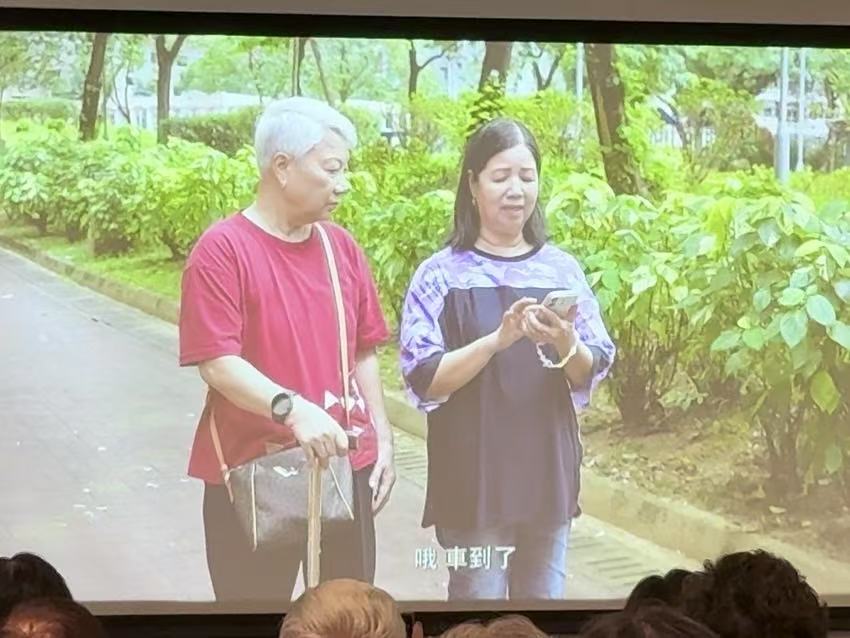
The instructional video series, "Companion Journey: Walking Together Along the Way", has been uploaded to the official video channel of the Social Welfare Department and will gradually be shown at various elderly service organisations and caregiver resource centres, extending the benefits of the programme to more older adults and caregivers.
By bringing together education, community engagement and professional practice, HKCT hopes to foster more human-centred social innovation initiatives that respond to genuine community needs, enabling technology to become not merely a tool, but a meaningful force that empowers people and supports their everyday lives.
Related Media Coverage:
2026年1月13日 ─ 中學生教長者用App 便利跨境出行(大公文匯)
2026年1月13日 ─ 中學生教長者用App 便利跨境出行(大公報)
2026年1月13日 ─ 長者親述從怕手機到北上自如 年輕人陪伴助跨科技難關 嘆「原來我都可以做到」(巴士的報)
2026年1月13日 ─ 港專培訓高中生 教長者用跨境出行App(明報)
2026年1月13日 ─ 港專培訓高中生 教長者用跨境出行App(明報加西網)
2026年1月13日 ─ 從害怕手機到北上自如 長者親述:科技難關有人陪就能跨過(點新聞)
2026年1月13日 ─ 沙田區支援照顧者服務計劃2025 長者:科技難關有人陪就能跨過(橙新聞)