HKCT Students Develop Anti-Forgery Technology to Combat AI-Enabled Contract Fraud, Present Research in Japan
Integrating Chinese National Cryptographic Standards with Fingerprint Authentication, Hardware-Isolated Verification Device Gains International Recognition
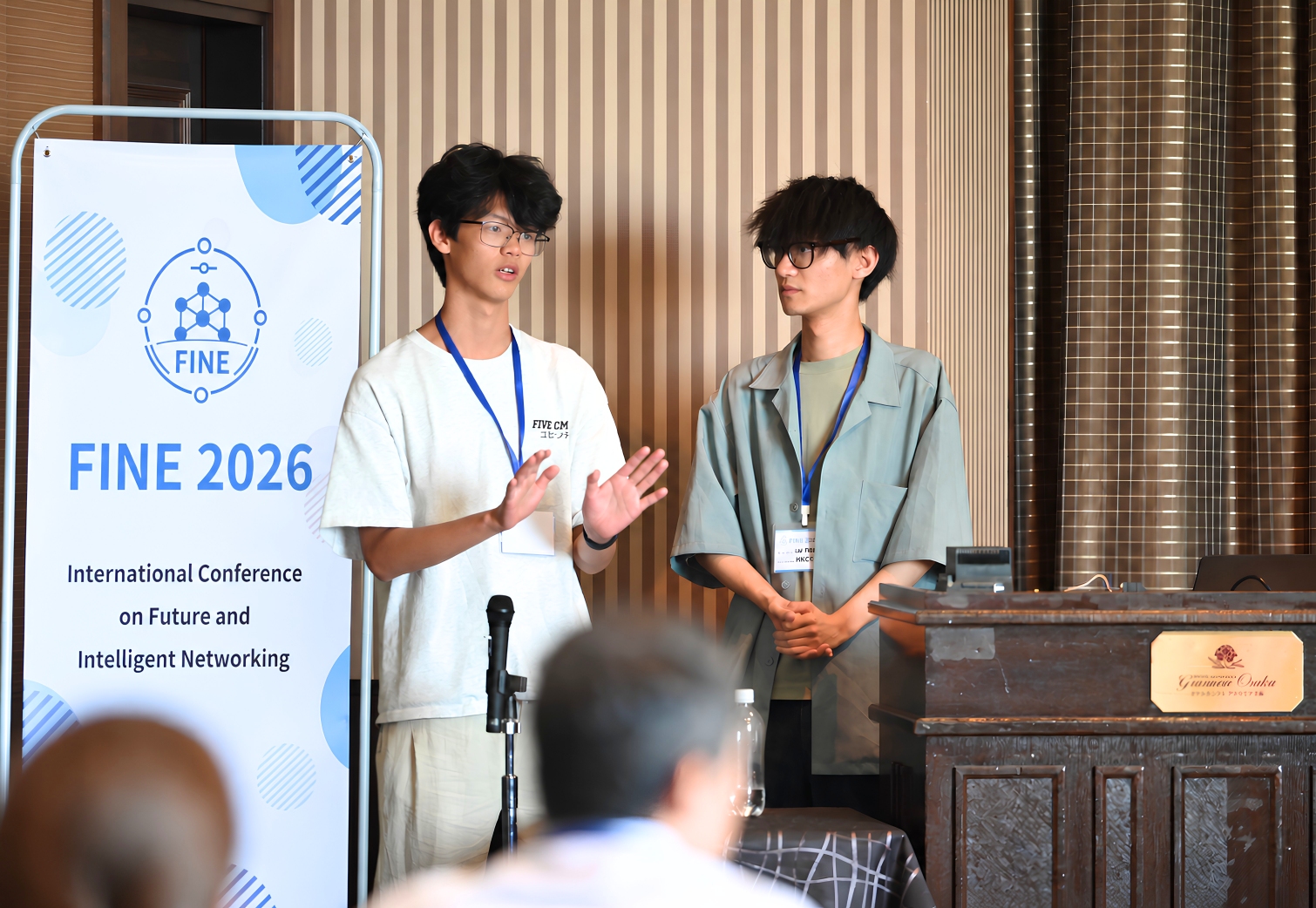
(HKCT Higher Diploma in Industrial Internet of Things student HUO Xinyu (left) and Higher Diploma in Cybersecurity student LO Mau-lam (right) present their self-developed “PDF-Inspector” device to international experts and scholars at the IEEE International Conference on Future and Intelligent Networks (IEEE FINE 2026) in Osaka, Japan)
(6 October 2026, Hong Kong) – With the growing prevalence of artificial intelligence (AI)-powered image generation and editing technologies, the risk of forged commercial contracts and documents is becoming increasingly serious, posing new challenges to conventional electronic signature verification mechanisms.
Recognising this emerging cybersecurity threat, LO Mau-lam, a student of the Higher Diploma in Cybersecurity (Testing and Compliance), and HUO Xinyu, a student of the Higher Diploma in Industrial Internet of Things at HKCT Institute of Higher Education (HKCT), independently developed “PDF-Inspector”, a hardware-based anti-forgery verification device.
The students were invited to Osaka, Japan, to present their academic paper, A Prototype for PDF Documents Integrity Verification Using Chinese National Cryptographic Algorithms and Hardware Isolation, at a dedicated workshop of the internationally renowned IEEE International Conference on Future and Intelligent Networks (IEEE FINE 2026), sharing their research Prototype for PDF Documents Integrity Verification Using Chinese National Cryptographic Algorithms and Hardware Isolation with experts and scholars from around the world.
Their presentation at the international academic conference showcased HKCT students’ ability to translate classroom knowledge into practical research and real-world cybersecurity solutions.
Overcoming the “Verifier’s Dilemma” to Address Emerging Risks of AI-Enabled Contract Forgery
Explaining the project's motivation, LO Mau-lam said the idea was inspired by what he learned in class about the growing adoption of electronic signatures and emerging document-tampering techniques. In recent years, malicious actors have exploited AI technologies and “shadow attacks” to forge or manipulate electronic contracts, potentially resulting in significant business losses. An even more challenging issue is the “Verifier’s Dilemma”: if the office computer used for verification has already been compromised by malware or viruses, the verification results displayed on the screen can no longer be trusted.
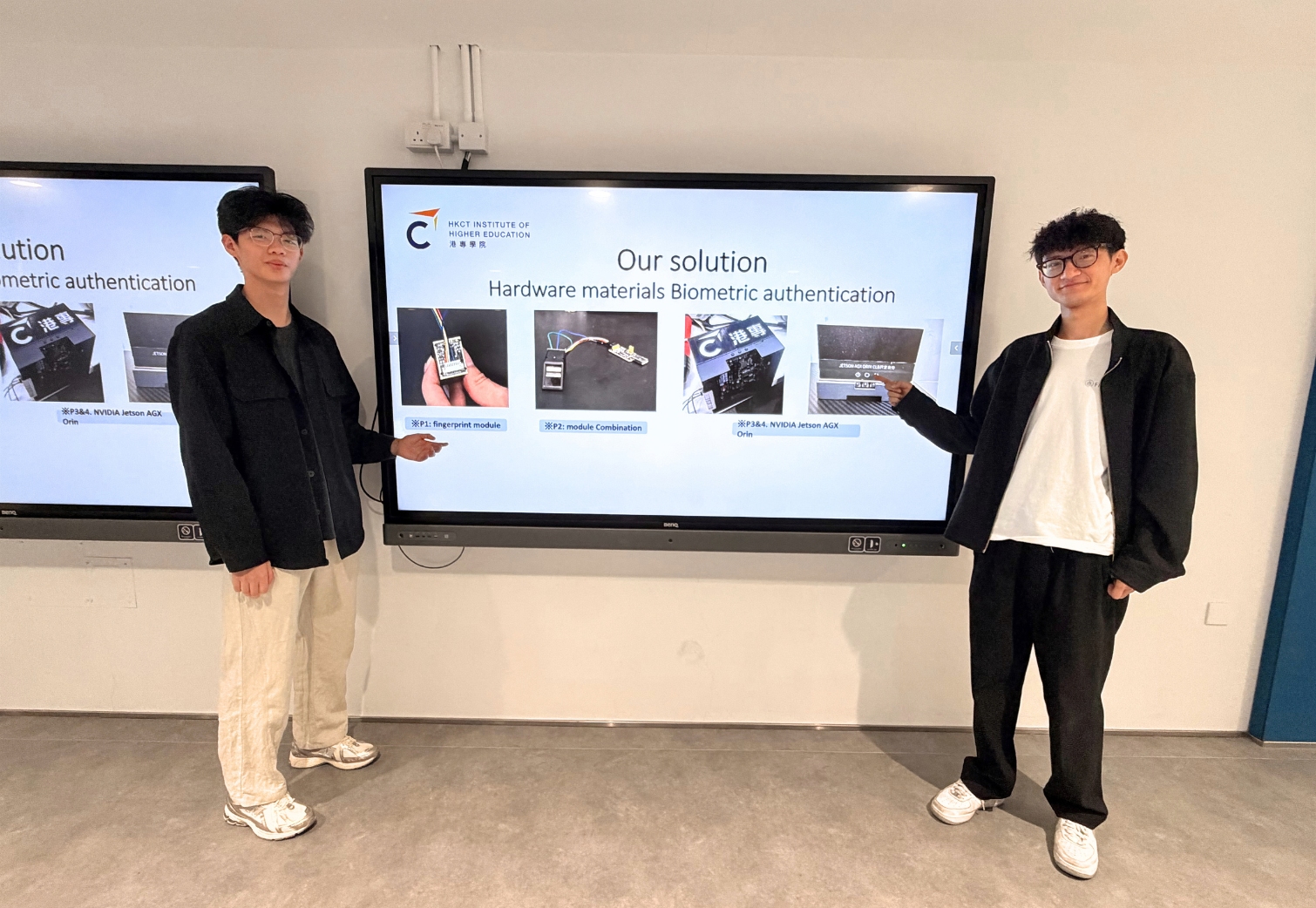
To address this security vulnerability at its root, the two students embarked on an interdisciplinary collaboration under the guidance of their instructor. HUO Xinyu, who specialises in Industrial Internet of Things, took charge of hardware development, while LO Mau-lam, specialising in cybersecurity, focused on software programming. After more than two months of development, they successfully created “PDF-Inspector”, a standalone hardware device operating independently of everyday office computer networks.
By conducting document verification in a physically isolated environment, the device prevents remote interference from hackers and provides an additional layer of protection for the integrity and reliability of the verification process.
SM Cryptographic Algorithms and Fingerprint Authentication: Three-Layer Anti-Forgery Mechanism Creates a Physically Isolated Security Environment
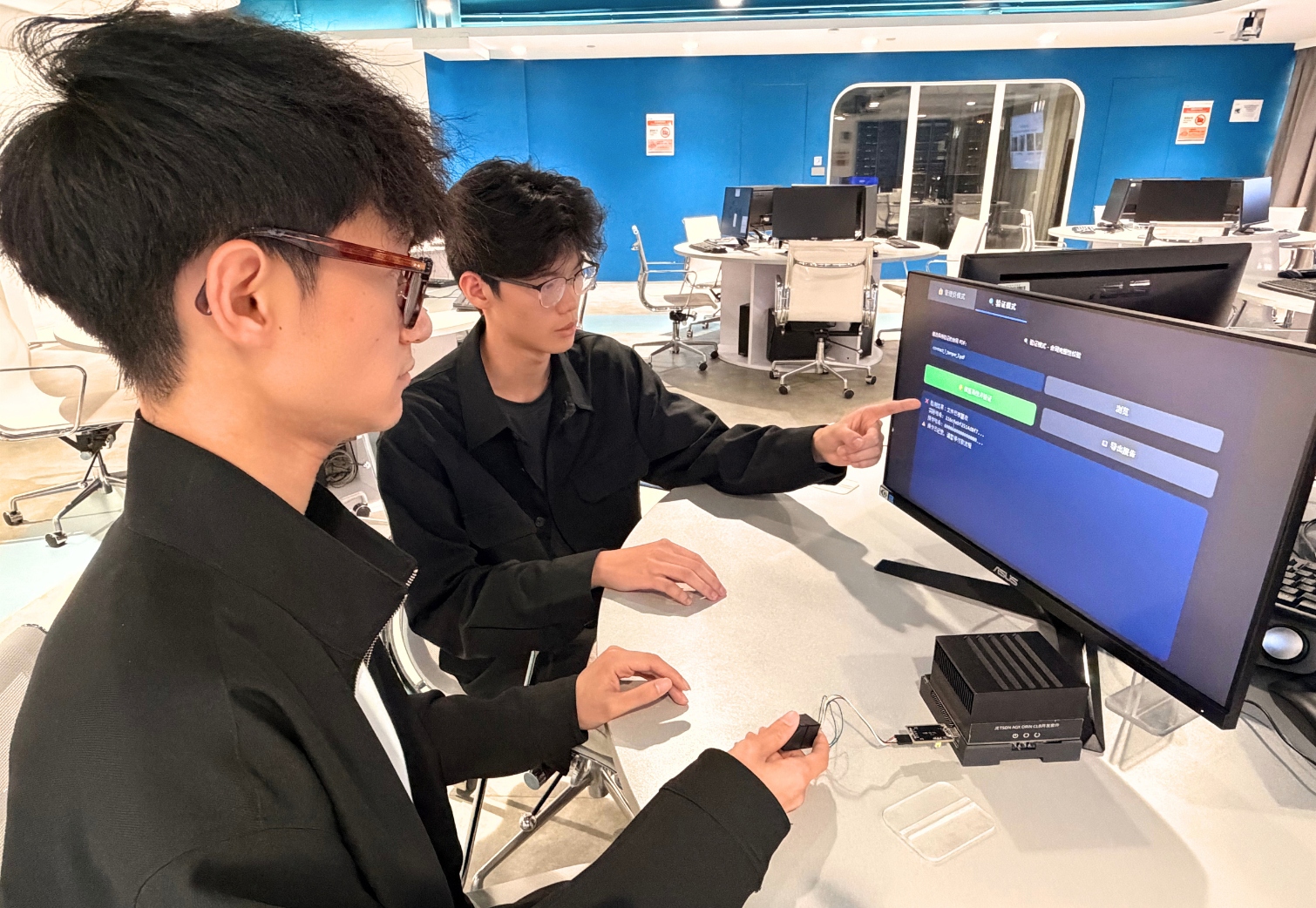
(The “PDF-Inspector” hardware device developed by LO Mau-lam and HUO Xinyu integrates offline hardware isolation, Chinese national cryptographic standards and fingerprint authentication, and is designed to safeguard commercial contracts against malicious tampering using AI and other technologies)
Dr Cao Yinfeng, Assistant Professor of the School of Cyber Technology at HKCT Institute of Higher Education, said the project demonstrated a high degree of innovation in practical applications and hardware-software integration. Unlike most existing verification solutions on the market, which rely on foreign-developed software or single-password authentication, the device integrates offline hardware isolation, Chinese national commercial cryptographic standards, and fingerprint biometrics into a dedicated device, creating a robust, multi-layered anti-forgery mechanism.
In terms of technical design, the device adopts SM3, a Chinese national commercial cryptographic algorithm, to generate a unique “digital fingerprint” for each PDF document, enabling it to promptly and accurately detect even minor alterations to a file. It also incorporates the SM2 algorithm for digital signatures, helping ensure the authenticity of verification reports.
In addition, the device features fingerprint authentication, requiring operators to verify their identity before accessing or verifying documents. By securely linking the operator’s identity, timestamp, and document characteristics, the system generates legally valid and traceable audit records, providing an additional safeguard against internal interference or unauthorised manipulation.
Putting Knowledge into Practice on the International Stage: Academic Exchange Inspires Deeper Technological Thinking
Throughout the development process, the two students applied cybersecurity concepts, fundamentals of cryptography, and programming skills acquired in the classroom to the development of a physical device. They also proactively reviewed extensive academic literature to overcome challenges in hardware-software integration.
Making their debut at an international academic conference, the two students presented their research entirely in English to experts, scholars and doctoral students from Asia, Europe and other regions. Although both admitted to feeling nervous and excited, they found the experience highly rewarding.
“Engaging in technical exchanges with outstanding scholars from around the world became a source of motivation for us to learn and improve. The experience not only broadened our horizons, but also helped us realise the importance of articulating ideas clearly and communicating professionally. It has strengthened our confidence to continue exploring the field of technology in the future.”
Deepening Applied Learning: Empowering Students to Address Real-World Challenges through Technology
Dr Cao Yinfeng said that HKCT has always encouraged students to connect their classroom learning with real-world cybersecurity challenges, developing their problem-solving abilities through hands-on exploration and practical application. The students’ success in translating theoretical knowledge into a functional verification prototype and presenting their research at an international academic conference demonstrates the effectiveness of HKCT’s applied approach to teaching and learning.
HKCT will continue to provide students with diverse platforms and opportunities for exploration, supporting them in developing their strengths and pursuing further innovation in the fields of information security and emerging technologies.