Is a background in the Korean language required for this course?
Whether you have never encountered Korean, have a slight foundation, or have even taken the TOPIK, you are suitable for this course:
No previous contact with Korean:
- Start from the basics (Hangul/the alphabet), moving from basic grammar to situational conversation
- We build Korean ability from shallow to deep, establishing confidence
- Tutors will use Cantonese to explain difficult points in a simple and easy-to-understand manner. Outside of class, you can practise Korean through lifestyle activities and converse with native Korean tutors
Existing Korean foundation:
- Through systematic revision and extended teaching, you will refresh old knowledge and learn new things, consolidating your foundation
- The course targets specific learning "pain points" to break through stagnation periods, significantly upgrading your Korean ability
- There is also more room to focus on corporate communication, transforming your skills into workplace advantages
What are the career prospects for studying Korean?
Studying Korean is not just about satisfying a cultural interest; it helps develop employment advantages and creates differentiation in the workplace. Apart from working in Korean companies, procurement and trading, tourism, hotels, high-end catering, marketing, public relations, and business negotiations, Korean is a powerful tool as an auxiliary professional skill. Starting salaries are often higher than general administrative positions.
How does this course differ from other Korean courses on the market?
Business Practice:
HKCT is the only tertiary institution offering a Higher Diploma in Korean. General courses focus on daily conversation, travel Korean, or grammar drills. The "Higher Diploma in Language and Corporate Communication (Korean)" teaches not only the language but also workplace communication knowledge such as marketing and advertising, media communication, and project organisation and promotion, turning you into a cross-cultural communication specialist.
Academic Recognition:
The qualifications of general courses are mainly built on Test of Proficiency in Korean (TOPIK) results. This Higher Diploma is recognised at Level 4 of the Hong Kong Qualifications Framework (QF), which is a formal tertiary qualification. It serves as a ladder for articulation to university bachelor's degrees and meets the "tertiary graduate" entry threshold for many large corporations.
Supporting Resources:
Students on this course enjoy college resources, including Korean exchange tours, further study and employment seminars, and career counselling. You can also participate in other student activities, providing whole-person development and enriching campus life.
Is it better to self-study Korean or attend physical classes?
The essence of language lies in two-way communication. Online self-study tends to be one-way reception. Only through real-time interaction and feedback in physical classes can knowledge be transformed into flexible communication skills.
Benefits of physical classes:
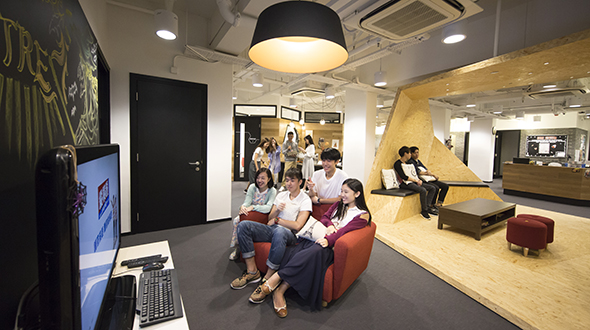
- Learning in a mutual-help atmosphere through interactive dialogue and group discussions
- Tutors can provide immediate guidance, such as correcting pronunciation and clarifying grammatical logic
- Professional tutors select appropriate teaching materials for systematic instruction
- Fixed class times and learning progress provide greater motivation




.jpg)