Higher Diploma in Industrial Internet of Things

Introduction
Higher Diploma in Industrial Internet of Things (IIoT)

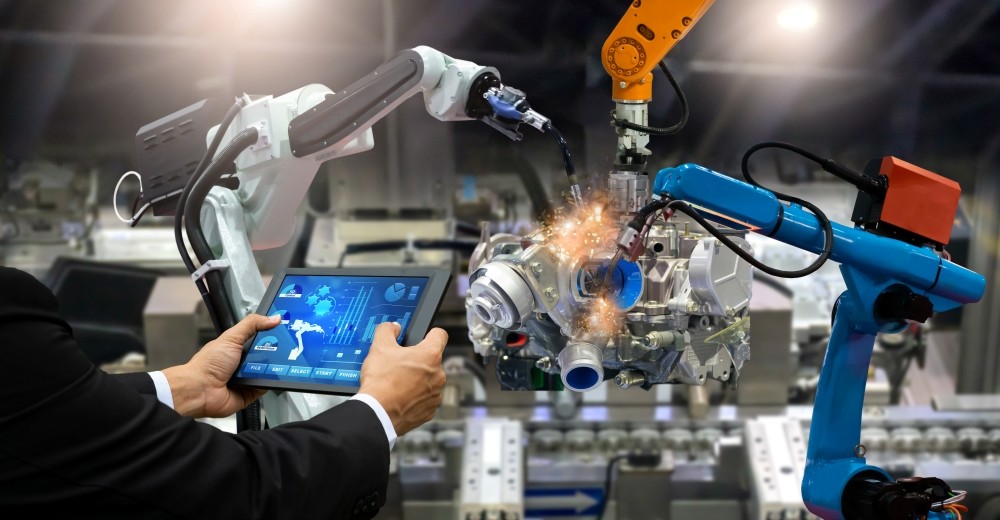
To align with Hong Kong's positioning as an International Innovation and Technology Hub, the government has been vigorously promoting Re-industrialisation/New Industrialisation in recent years and has initiated a series of innovation and technology infrastructure projects. The promulgation of the Hong Kong Innovation and Technology Development Blueprint at the end of 2022 has set specific directions and goals for the development of innovation and technology in Hong Kong. To meet this trend, HKCT has launched the first Internet of Things (IoT) Higher Diploma programme in Hong Kong. At the same time, with the government releasing the ‘Hong Kong Smart City Blueprint 2.0’, Hong Kong is determined to develop into a world-class smart city. To align with this major trend, the programme focuses on cultivating students' practical operational skills in the field of the Internet of Things (IoT), enabling students to master innovative technology knowledge in IoT, cloud computing, data analytics, and 5G. This aims to cultivate talent necessary for the development of innovative technologies such as the IoT and smart technology in Hong Kong.

Programme Objectives and Intended Learning Outcomes


Click here now to learn more about the development of ‘Cyberspace Technology’ at HKCT.
Programme Enquiry: WhatsApp

Professional Qualification

Students who enrol in the Higher Diploma in Industrial Internet of Things can apply to become Student Members of 'The Hong Kong Computer Society' (HKCS), and upon graduation, they may consider applying to become Associate Members.

Contents

Programme Aims

The Internet of Things (IoT) is an important technology for building smart cities and is a key technology of the future that runs parallel to artificial intelligence, robotics, and virtual reality. In line with this, HKCT has launched a Higher Diploma programme in IoT to comprehensively equip students with the necessary technical skills to enter the IoT profession, such as smart manufacturing and wireless technology. Additionally, the programme provides internship opportunities with well-known companies, allowing students to gain exposure to various technological fields like communication and wireless sensor design. Graduates, whether aspiring for further education or employment, will possess adequate preparation and advantages for their chosen paths.

Programme Features

  • The First Ever in Hong Kong: The first and only Industrial Internet of Things (IIoT) sub-degree programme accredited at Hong Kong Qualifications Framework Level 4 in Hong Kong.
  • State-of-the-art Equipment: The ‘Internet of Things Terminal Security Lab' and 'Industrial Internet of Things Training Centre' were established to support teaching activities. Students can learn about Internet of Things concepts and technologies, such as Smart Manufacturing, Digital Twin, Wireless Technologies, Cloud Computing, Data Analytics, and Sensors through professional equipment in the laboratory. This programme offers practical, hands-on opportunities where students will build various IoT devices, test hardware equipment, and implement and debug IoT systems.
  • IoT and AI Integration: This programme covers AI techniques, including machine learning algorithms, enabling students to use IoT data for predictive analysis and optimised decision-making in areas like smart homes, autonomous driving, medical monitoring, supply chain management in retail, industrial equipment monitoring, and production line optimisation.
  • Practical Application of AIoT Systems: Through specific case studies, this programme enables students to construct complete ‘Sense-Analyse-Act’ AIoT systems. Students will learn to integrate electricity meters, foot traffic monitors, and environmental sensors in smart buildings, utilising AI to regulate air conditioning and lighting; or in remote health monitoring, to apply data from wearables like smartwatches to train deep learning models for identifying health anomalies. This practical training ensures mastery of core technologies from hardware data acquisition to intelligent cloud processing.
  • Strong Industry Ties: The programme is supported by renowned local and Chinese Mainland technology companies and strategic partners, including but not limited to the IoT HK Association, Alibaba, Sangfor Technologies, China Unicom and China Mobile. These companies will provide support to IoT higher diploma students in terms of networks and facilities and offer exchange and training opportunities, internships, and career development to our students in Hong Kong and the Greater Bay Area.
  • Renowned Academic Partners: We have collaborated with 'The School of Cyber Science and Technology (SCST) at Zhejiang University' and 'Shandong University of Science and Technology' to work together on talent exchange and development, and to collaborate on the development of professional skills, product manufacturing, research, and technology exchange. As a result, IoT higher diploma students can learn and exchange ideas at leading IoT institutions.

Featured Modules

  • Introduction to IIoT and Smart Manufacturing
  • Embedded Systems
  • Programming for IoT
  • Cloud Computing
  • Sensor Technology Principle and Applications
  • Wireless Communications and Applications

Full Programme Modules

Programme Activities and Videos
Industry Visit: ATAL Engineering Group
Industry Sharing: Exploring the Development Opportunities of AIoT in Hong Kong
Students were interviewed by the reporter at the ‘World Internet Conference’
World Internet Conference
Industry Sharing: Milesight - Smart Building Day
IoT - Smart Home
IoT - Autopilot
Graduation Pathways

2025 Graduation Progression

Further Education: Among graduates who pursued further studies, 90% were successfully admitted to bachelor's degree programmes, with placements including Hong Kong's UGC-funded universities. 
Employment: A 100% employment rate was achieved by graduates who entered the job market.

Articulation Pathways

The Industrial Internet of Things is an interdisciplinary discipline, involving knowledge in communication technology, sensor technology, network technology, etc. 

HKCT 2+2 Articulation Scheme

【100% Degree Articulation】Students who have completed the 2-year HKCT ‘Higher Diploma in Industrial Internet of Things’ will be eligible to receive an admission offer^ to the 2-year CTIHE 'Bachelor of Science (Hons) in Computer Science and AI Engineering’ / ‘Bachelor of Science (Hons) in Computer Science and Cybersecurity' of senior-year entry (i.e. direct entry to the third year of the Programme). It only takes 4 years for students to achieve both Higher Diploma and Bachelor's Degree qualifications.

^Students should achieve the designated academic result and pass an interview. Admission is subject to quota availability.

Other Overseas and Local Bachelor’s Degree Programmes

Graduates can also articulate to overseas and local bachelor’s degree programmes (Senior year entry) in Internet of Things or Information Technology.
Graduates may apply for the following top-up bachelor's degree programmes:

The Hong Kong University of Science and Technology
- BEng in Computer Engineering
- BEng in Computer Science 

The University of Hong Kong
- BEng in Computer Engineering
- BEng in Computer Science

The Chinese University of Hong Kong
- BEng in Information Engineering 
- BEng in Computer Engineering
- BSc in Computer Science

The Hong Kong Polytechnic University
- BSc (Hons) in Artificial Intelligence and Information Engineering
- BSc (Hons) in Computer Science
- BSc (Hons) in Information Security

City University of Hong Kong
- BSc Computer Science

The Education University of Hong Kong
- BSc (Hons) Artificial Intelligence and Educational Technology

Employment Prospects

The Internet of Things (IoT) has a wide range of applications and is experiencing rapid growth not only in Hong Kong but also in the Chinese Mainland and globally. While smart cities, logistics, and manufacturing are important areas of application, the IoT is also playing an increasingly vital role in other industries, such as healthcare, retail, energy management, transport, agriculture, and home automation. These applications are driving the demand for IoT professionals and creating more possibilities for the future development of the IoT.

Students can pursue careers in information technology or IoT-related fields, such as the design, development, management, and maintenance of communications, wireless sensors, and information security. With experience, students can advance to higher positions.

Some IoT-related positions:
- Embedded Systems Engineer
- IoT Engineer
- Cloud Engineer
- Data Analyst
- IoT Project Manager
- Hardware Engineer
- IoT Security Engineer
- IoT Solutions Architect
- Chief Technology Officer (CTO)

Internship

The programme is supported by the numerous renowned Chinese Mainland and local technology companies which provide exchange and training opportunities, internships and career development in Hong Kong and the Greater Bay Area to students.

Teaching Team

Prof. YIU Siu Ming, Honorary Professor
Associate Director and Professor, Department of Computer Science, The University of Hong Kong

Associate Prof. XU Guoai
PhD Supervisor
Council Member, Cyber Security Association of China
Extensive experience in teaching, research, and commercialisation in the fields of cyberspace and IoT security

Dr LI Songsheng
Associate Researcher, Guangdong Province
Project Leader, Guangdong Key Area Projects for Higher-educational Institutions
Author of multiple SCI-indexed publications and IEEE conference papers on the Internet of Things (IoT); Reviewer for multiple SCI journals
Holder of one invention patent and two utility model patents 

Mr HO Chun Wah
Former Development Manager, ION Fidessa
Over 20 years of experience in cybersecurity and financial technology

Dr CAO Yinfeng
PhD, The Hong Kong Polytechnic University
Recipient of multiple Best Paper Awards; Member of organising committees for academic conferences and journal reviewer
Operations Committee Member, IEEE Next Generation Networks and Internet Technical Committee (NGNI-TC)

Programme Advisor

Mr Wilson CHONG
Chairman, IoT HK Association

Mr Christopher LAI
Executtive Director, Lucullus Group

Mode of Study

Full Time

Teaching Mode

Face to face

Commencement of Study

Sep 2026

Duration

24 Months

Location
Entry Requirements

Local Students

  • Attained Level 2 in 5 HKDSE subjects1, including Chinese Language2 and English Language, and the performance in Applied Learning subjects would be considered on a case-by-case basis; or
  • Holder of Diploma of Applied Education / Diploma Yi Jin; or 
  • Holder of Diploma and 
    - in the relevant discipline at QF Level 3 with a total learning size of normally 150 QF Credits; and 
    - learning contents covering Chinese and English Languages; or
  • Aged 21 or above with 1 year working experience; or 
  • Equivalent qualifications; 
    AND 
  • Pass the admission interview. 

1 With effective from 2024/25, 'Attained' in 'Citizenship and Social Development' (equivalent to 'Level 2' for the HKDSE subject 'Liberal Studies' before 2024/25), or the attainment of 'Level 2' in Mathematics Extended Part (Module 1 or Module 2) is also recognised as meeting the general entry requirements.
2 'Attained' level of Applied Learning Chinese (for non-Chinese speaking students) is accepted as Chinese Language qualification for the admission, but it is not considered as an elective subject.

Mainland Students

Attained satisfactory results in National University Entrance Examination (GaoKao), including English (English Language Public Examinations accepted by HKCT); or equivalent qualifications.

Mainland students meeting the above requirements can apply for the first year admission and need to pass the admission interview.

For mainland students interested in applying for this programme, please visit Mainland Admission.

IoT Terminal Security Lab

IoT Terminal Security Lab
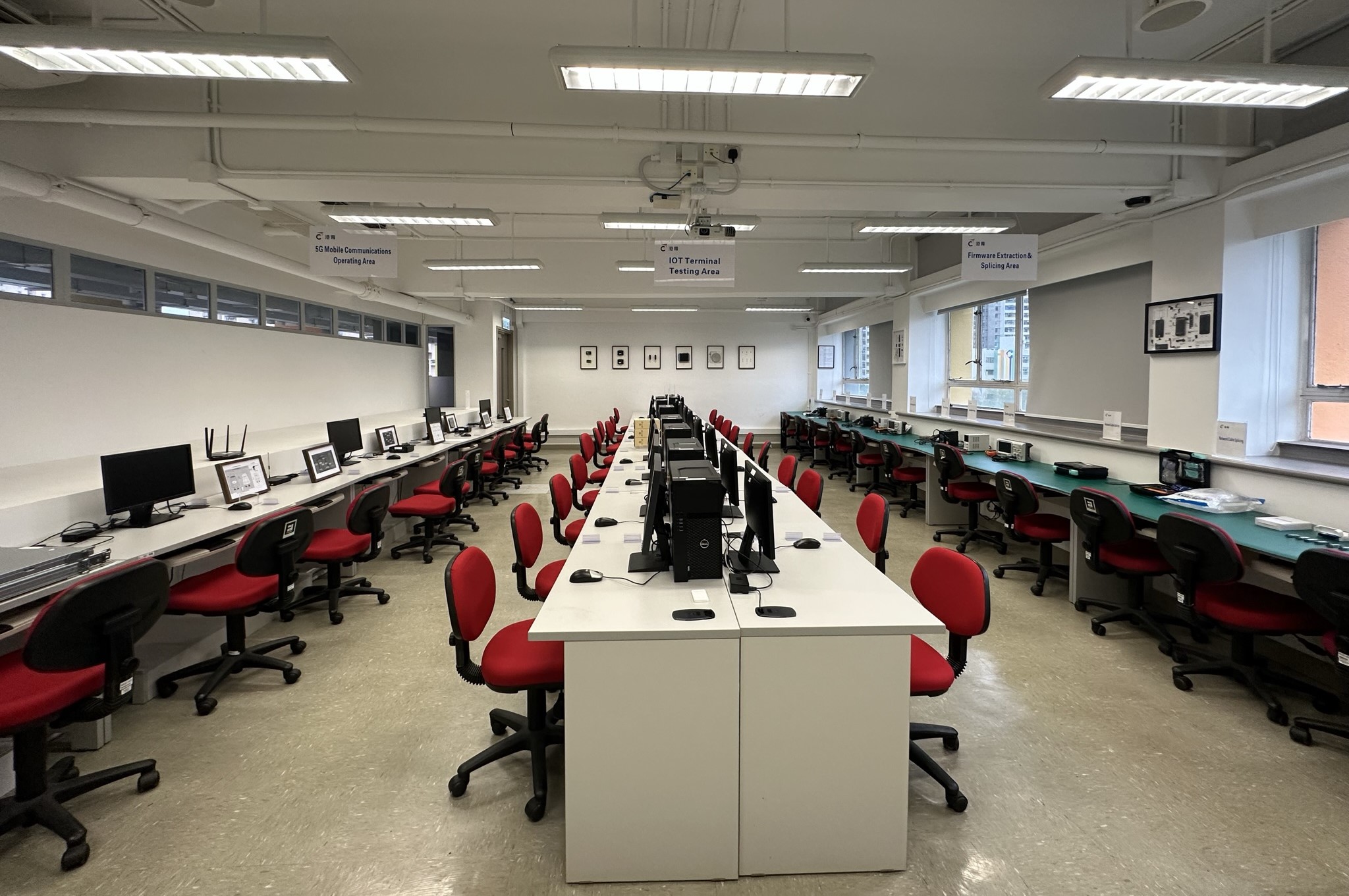
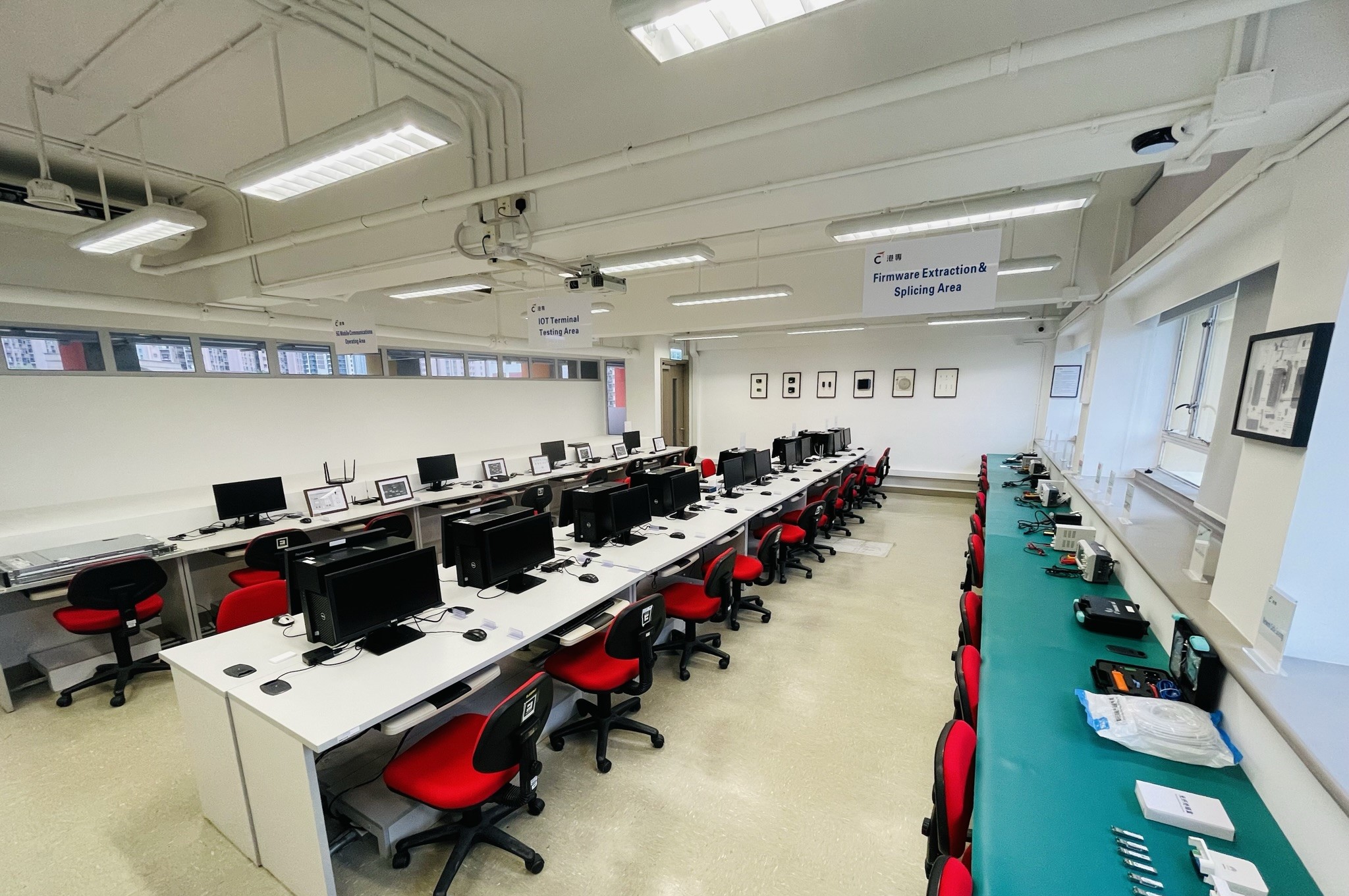
The laboratory designed for the IoT Higher Diploma programme is divided into three key areas: firmware maintenance for IoT devices, 5G mobile communication operations, and IoT terminal testing. It offers a comprehensive experimental environment that facilitates IoT hardware disassembly, firmware extraction, and maintenance. The lab includes advanced 5G communication simulation networks featuring the 5G core network, base stations, and RF terminals, along with testing capabilities for IoT device tags. Additionally, the laboratory is equipped with smart locks, human sensors, and a real-time monitoring platform, creating a fully functional IoT system in practice.

IIoT Engineering Training Centre

IIoT Engineering Training Centre
The centre is equipped with a wide range of popular Internet of Things (IoT) main control boards, including Arduino UNO, ESP8266, ESP32, Raspberry Pi, 8051, and other computer chips. It also features an extensive selection of sensors and actuators, such as temperature and humidity sensors, human infrared sensors, ultrasonic sensors, joysticks, and servos. These components enable the implementation of complex and diverse smart home scenarios and smart parking systems. Additionally, the centre is outfitted with various laser radars and cameras, providing IoT higher diploma students with hands-on opportunities to explore and experience autonomous driving technology.


ZHU Junpeng

Articulated to BSc (Honours) in Artificial Intelligence and Educational Technology (EdUHK)
'Studying the Internet of Things (IoT) for two years at HKCT provided me with a deep understanding of how theory and practice complement each other. The programme was well-structured and up-to-date, covering key areas from embedded systems to cloud applications.

Through hands-on project development and team collaboration, I not only mastered essential skills such as IoT system design and data processing but also honed my ability to think independently and solve complex problems.

This programme has laid an excellent foundation for my current AI degree and future career.'


LIU Zouzun

Articulated to BSc (Honours) in Artificial Intelligence and Educational Technology (EdUHK)
'At HKCT, I thrived in a supportive community with strong student-lecturer rapport. My lecturers provided invaluable guidance on both my academic pursuits and personal development. Even after graduation, they continue to show their support by checking in on my progress as I pursue my BSc (Hons) in Artificial Intelligence and Educational Technology at The Education University of Hong Kong.

The programme offered practical industry applications, allowing me to apply theory to practice and build key professional skills. Participating in diverse campus activities, organised by the Student Development Centre, was also instrumental in my personal growth.'


MA Yixiao

Articulated to Bachelor of Business Administration (Honours) in Risk and Insurance Management (Insurance Technology Concentration) (LingU)
'Thanks to the dedicated guidance of my lecturers over the past two years, my studies in the Internet of Things programme have been incredibly rewarding. Spanning from core theoretical foundations to practical project applications, the programme has not only enhanced my teamwork skills but also solidified my professional knowledge in the field. This has provided me with a strong foundation for articulating to my bachelor's degree.'


LU Suxing

'Studying at HKCT has brought me many benefits. The school has created a stimulating academic environment, and the campus facilities have helped improve my learning efficiency. In addition to core knowledge of the Internet of Things, the school provided opportunities for me to learn vital network security skills required in the current innovation and technology industry.

The teachers explain complex theories in an engaging and accessible way. Furthermore, various extracurricular activities are arranged outside of class hours, allowing us to understand current trends and broaden our horizons.'


NG Yik Yee

'I am currently working as an Assistant Engineer in the Internet of Things Department at CardApp Limited. I chose to pursue this programme to enhance my competitiveness in the market. The curriculum emphasises both theory and practical skills, which will directly assist me in advancing my education and career in the future.

The professional guidance and advice from my mentors have significantly boosted my confidence. Their expertise and practical experience have enabled me to grasp complex concepts easily and apply them to real-life scenarios. The school's professional computer and laboratory facilities were instrumental in supporting my learning, allowing me to successfully complete various experiments and projects.

I am grateful to the school for awarding me the ‘CT Entrance Scholarship for Excellent Academic Achievement’. This scholarship has not only eased my financial burden but has also motivated me to work even harder in my studies.'

QF Level
The qualification of this programme is recognised under the Qualifications Framework in Hong Kong.
QF level:4
QR Registration No.:23/000525/L4
Registration Validity Period:1/9/2023 to 31/8/2026

Applicants who do not meet the entry requirement may apply for a 1-year Diploma of Applied Education (listed below) and articulate to this IoT Higher Diploma programme.

What will I learn in the Higher Diploma in Industrial Internet of Things?

The IoT programme combines Programming, Hardware Implementation, and Artificial Intelligence (AI) Applications.

  • Programming (Coding): Learn languages such as C/C++ or Python to write code that controls hardware operations.
  • Hardware Implementation: Learn to connect sensors and circuits to build smart home systems or automated devices.
  • Artificial Intelligence (AI): A key focus of the programme. Students will learn to integrate AI technology into devices to collect and analyze big data from sensors. This enables intelligent predictions and automated decision-making (e.g., smart traffic lights adjusting to traffic flow, cashless stores automatically identifying products, or wearable devices monitoring health metrics).

Can I apply for this IoT Higher Diploma programme if I did not study ICT or Science subjects in secondary school?

Absolutely. HKCT's Higher Diploma in Industrial Internet of Things is designed for students from diverse academic backgrounds and does not require a prior background in Science or ICT.

The curriculum adopts a ‘step-by-step’ approach. Modules such as ‘Introduction to IIoT and Smart Manufacturing’ and ‘Embedded Systems’ are taught progressively. As long as you are interested in innovative technology and smart city applications, and are willing to learn through practice, even Arts students or those with’zero foundation’ can master knowledge in IoT, Cloud Computing, and Data Analysis.

Can I articulate directly to a Bachelor's Degree after completing this IoT Higher Diploma?

Yes! HKCT offers a ‘2+2 Articulation Pathway’ with a 100% degree articulation guarantee.

  • Direct Articulation to HKCT Degrees: Eligible graduates will receive an offer for the Bachelor of Science (Hons) in Computer Science and AI Engineering or the Bachelor of Science (Hons) in Computer Science and Cybersecurity at the HKCT Institute of Higher Education. Students will be admitted with Senior Year Entry (direct entry into Year 3), meaning you can obtain a Bachelor's qualification in just 4 years (2-year Higher Diploma + 2-year Bachelor's Degree).
  • Articulation to Other Institutions: Among graduates who chose to further their studies, 90% successfully articulated to Bachelor's Degree programmes, including those at UGC-funded universities.

What career opportunities are available after graduation? What is the industry outlook?

With the Hong Kong Government promoting the ‘Smart City Blueprint 2.0’ and ‘New Industrialisation’, there is a massive demand for IoT talent.

Graduates can join high-growth sectors such as healthcare, retail supply chains, transportation, and energy management. After accumulating experience, graduates can advance to senior positions. Common roles include:

  • IoT Engineer
  • Embedded Systems Engineer
  • Cloud Engineer
  • Data Analyst
  • IoT Security Engineer

Furthermore, students have the opportunity to secure internships at major technology enterprises such as Sangfor, China Unicom, and China Mobile during their studies, gaining valuable experience for their future careers.

Tuition fees and subsidies are to be reviewed and adjusted annually on various factors.